In the vast ecosystem of precision machining, few material-process pairings have proven as reliable and effective as brass components produced via CNC turning. Brass—an alloy of copper and zinc—has long been favored for its machinability, corrosion resistance, and aesthetic appeal. When combined with computer numerical control (CNC) turning, it unlocks levels of accuracy, repeatability, and production efficiency that are indispensable across industries ranging from plumbing and pneumatics to electronics and medical devices. This article explores the technical nuances, advantages, applications, and quality considerations of CNC turning for brass components.
What Is CNC Turning?
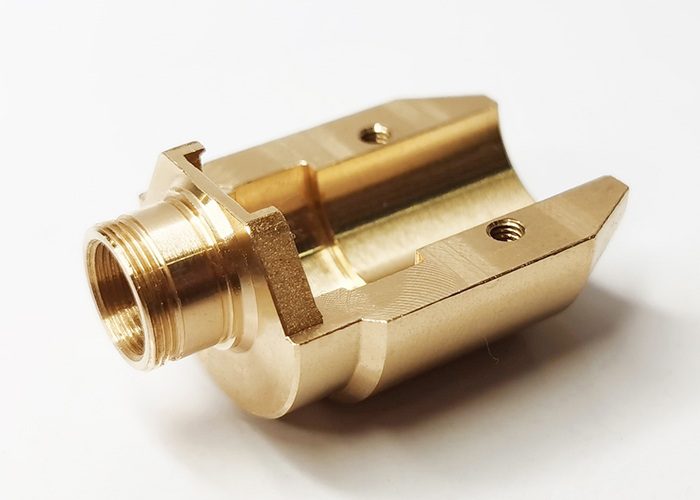
CNC turning is a subtractive manufacturing process in which a rotating workpiece is fed against a stationary cutting tool. The workpiece—typically a cylindrical brass rod or bar—spins at high speed while the cutting tool traverses linearly along the axis of rotation, removing material to create external or internal features such as diameters, shoulders, grooves, tapers, threads, and even complex contours. Modern CNC lathes often include live tooling and sub-spindles, enabling milling, drilling, and tapping in a single setup. This capability is particularly valuable for brass components that require secondary operations like cross-holes or flats.
Why Brass? The Material Advantage
Brass is often described as one of the most machinable engineering materials. Leaded brass grades, such as C36000 (free-cutting brass), offer a machinability rating of 100%—the benchmark against which all other metals are compared. Chips break easily and cleanly, tool wear is minimal, and excellent surface finishes can be achieved without secondary polishing. Additionally, brass does not work-harden like stainless steel, which allows for consistent cutting forces and high turning speeds—often exceeding 3,000 to 5,000 surface feet per minute on modern lathes.
Beyond machinability, brass provides inherent corrosion resistance, making it ideal for water and gas handling systems. It is non-magnetic, spark-resistant, and offers good electrical and thermal conductivity. These properties make brass components indispensable in valves, fittings, connectors, and sensor housings.
Key Advantages of CNC Turning for Brass Components
- High Precision and Repeatability
CNC turning machines operate with positional accuracy measured in microns (0.001 mm). Once a program is verified, every brass component from a production run of thousands will be identical. This repeatability is critical for threaded fittings and fluid control components where even minor deviations cause leakage or assembly failure. - Complex Geometries in One Cycle
With live tooling and Y-axis capabilities, a single CNC turning center can complete a brass part that would otherwise require separate milling, drilling, and turning operations. For example, a brass nozzle with a hexagonal profile, internal threads, and cross-drilled holes can be fully machined from bar stock in under 60 seconds, reducing handling errors and labor costs. - Excellent Surface Finish
Brass naturally yields a smooth, lustrous surface when turned with sharp carbide or polycrystalline diamond (PCD) tools. Many CNC-turned brass components are ready for use or plating directly from the machine, eliminating secondary grinding or polishing steps. - High Production Rates
Brass’s low cutting forces allow for aggressive feed rates and spindle speeds. Paired with automatic bar feeders and part catchers, CNC turning becomes a lights-out manufacturing process. A single machine can produce hundreds or even thousands of small brass components per hour with minimal operator intervention. - Material Savings
CNC turning optimizes material utilization by reducing the bar remnant length. Furthermore, brass chips are highly recyclable, and many machine shops return them to foundries for credit, offsetting raw material costs.
Typical Applications of CNC-Turned Brass Components
The unique combination of brass and CNC turning serves a wide range of end uses:
- Plumbing and HVAC: Brass fittings, adapters, couplings, valve stems, and hose connectors. The alloy’s resistance to dezincification (especially with low-lead or lead-free brass grades like C27450) ensures long-term reliability in potable water systems.
- Pneumatics and Hydraulics: Push-in fittings, quick-disconnect bodies, pressure regulator components, and banjo bolts. Tight tolerances on threads and sealing diameters are routinely held to ISO or SAE standards.
- Electrical and Electronics: Terminal pins, connector shells, switch bushings, and fuse caps. Brass provides excellent conductivity and solderability.
- Automotive: Fuel system fittings, brake proportioning valve components, sensor housings, and speedometer drive gears. The non-magnetic property is also advantageous in certain sensor applications.
- Medical Devices: Small brass components for gas delivery systems, dental handpieces, and surgical instrument handles. Machining must comply with cleanliness and traceability requirements.
- Industrial Instrumentation: Pressure gauge sockets, thermowell fittings, and analytical instrument connectors.
Challenges and Solutions in CNC Turning Brass
While brass is forgiving, several considerations must be addressed for optimal results:
- Burr Formation – On sharp corners or intersecting holes, small burrs may form. This is mitigated by using sharp tools, proper feed retract strategies, and optional deburring cycles (e.g., brushing or tumbling).
- Chip Control – Although brass chips break easily, long stringy chips can still occur with very low feed rates. High-pressure coolant and chip-breaking tool geometries resolve this.
- Lead-Free Brass Grades – Environmental regulations (e.g., RoHS, NSF/ANSI 372) are driving a shift from leaded to lead-free or low-lead brass (e.g., C69300, C46500). These alloys have lower machinability (around 80–90% of C36000) and require slower speeds, sharper tool edges, and more frequent tool changes. However, modern CNC lathes handle them effectively with optimized parameters.
- Surface Marking – Brass is relatively soft, so clamping marks from chucks or collets can occur. Soft jaws or custom collet pads prevent cosmetic damage.
Quality Assurance and Inspection
Reputable manufacturers of CNC-turned brass components implement rigorous quality control. Dimensional checks typically involve digital calipers, micrometers, and bore gauges for critical diameters. For high-tolerance features, optical comparators or CNC vision systems are used. Threads are verified with go/no-go gauges. Surface finish is often assessed with a profilometer (typical target Ra ≤ 0.8 µm for sealing surfaces). First-article inspection reports and statistical process control (SPC) data provide traceability and process capability evidence (Cpk ≥ 1.33 is common).
Conclusion
CNC turning of brass components represents a mature yet continually advancing manufacturing technology. The natural synergy between brass’s outstanding machinability and the precision, speed, and automation of CNC turning makes it a go-to solution for engineers seeking cost-effective, high-quality metal parts. From a simple brass spacer to a complex multi-feature valve body, this process delivers dimensional accuracy, surface quality, and production scalability that few other material-process combinations can match. As environmental pressures drive innovation in lead-free alloys and as CNC machines become more intelligent with adaptive control and in-process inspection, the future of brass component turning remains bright—proving that sometimes, the best partnerships are the ones that have stood the test of time.