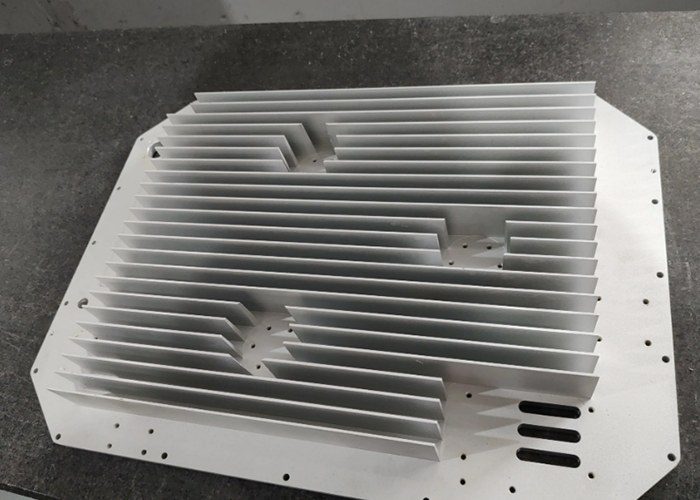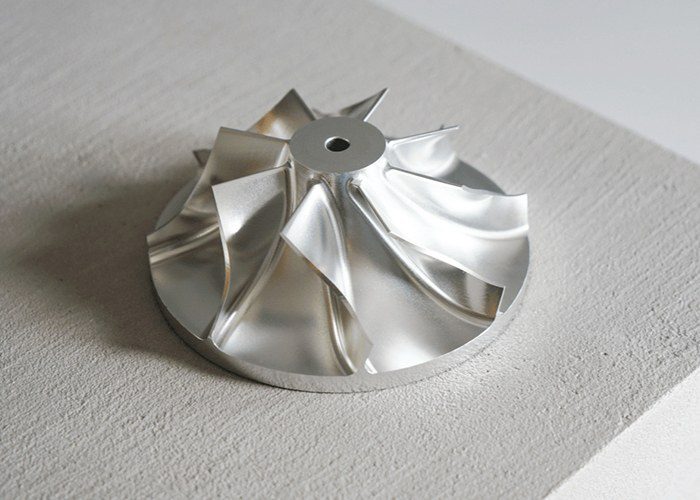
In the hum of a modern factory, far from the clanging chaos of early industrial revolutions, a more refined symphony is being performed. Its conductors are digital codes, its musicians are servo motors and cutting tools, and its masterpiece is the seemingly humble, yet profoundly significant, CNC turned component. These are not mere pieces of metal or plastic; they are the fundamental notes in the composition of contemporary engineering, the unsung heroes enabling everything from life-saving medical devices to interstellar exploration.
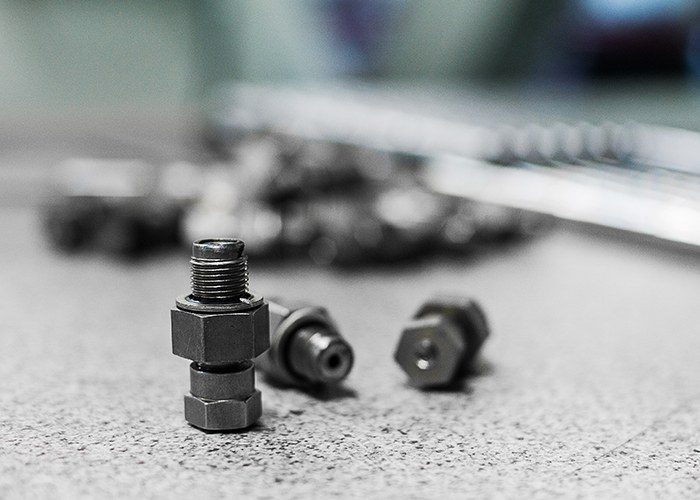
At its core, CNC (Computer Numerical Control) turning is a subtractive manufacturing process where a bar of material is rotated at high speed while a precision cutting tool traverses along multiple axes, sculpting the workpiece to exact digital specifications. To call it merely “machining” is to call a Stradivarius “a wooden box with strings.” The process transcends simple shaping, achieving a harmonious marriage of geometry, physics, and computer science. The “turned component” that emerges—a shaft, a bushing, a connector, a complex hydraulic fitting—is a testament to this synergy. Its value lies not in its individuality but in its flawless conformity to a virtual blueprint, a perfection that is repeatable ten or ten thousand times over.
The magic of these components begins long before metal meets tool. It starts in the realm of pure thought, with a CAD (Computer-Aided Design) model. This digital twin is translated, via CAM (Computer-Aided Manufacturing) software, into a language of coordinates—G-code—that the CNC lathe understands. This code dictates every nuance of the movement: the spindle speed (RPM), the feed rate, the depth of cut, the tool path. Modern multi-axis lathes, often with live tooling and Y-axis capabilities, transform this from simple cylindrical work into a complex ballet. They can mill flats, drill off-center holes, and machine intricate contours, all in a single setup. This eliminates cumulative errors from multiple handlings, embedding integrity into the component from its very creation.
The materials narrative is equally compelling. CNC turning is agnostic, sculpting with equal finesse into aerospace-grade aluminum (like 6061 or 7075), robust stainless steels (303, 304, 316), exotic titanium alloys for biomedical implants, durable brass for marine fittings or engineered plastics such as PEEK and Delrin. The selection is a critical strategic decision, balancing tensile strength, corrosion resistance, thermal conductivity, weight, and cost. The turned component thus becomes the physical manifestation of a material science equation, optimized for its destined environment—whether that is the corrosive interior of a chemical pump, the sterile field of an operating room, or the vacuum of space.
Precision here is not a luxury; it is the entire raison d’être. Tolerances are specified in microns, which are equivalent to thousandths of a millimeter. Surface finishes are specified by Ra values, achieving mirror-like smoothness that reduces friction, improves fatigue life, and ensures perfect sealing. This dimensional fidelity is what allows for press-fits that last, rotating assemblies that run without play, and fluid systems that do not leak. A CNC-turned hydraulic valve spool, for instance, with its meticulously machined lands and grooves, controls the flow of high-pressure fluid with zero ambiguity. Its performance is direct, reliable, and born from its impeccable geometry.
Beyond the technical brilliance lies a profound, often overlooked, virtue: sustainable efficiency. Modern CNC turning, equipped with high-pressure coolant systems and optimized toolpaths, minimizes material waste. The swarf—the coiled chips produced—is often collected, recycled, and reborn. The process uses energy with focused intent, and the elimination of manual intervention reduces human error and variability, leading to less scrap and more right-first-time production. In an era of conscious manufacturing, the precision of CNC turning is an ally to sustainability.
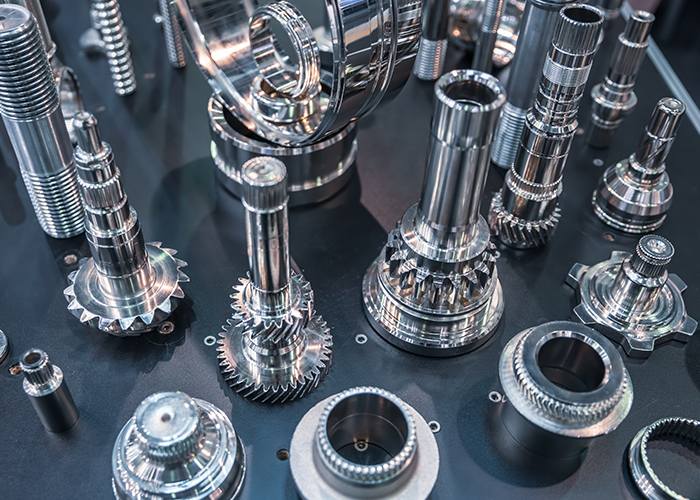
The applications are a testament to their ubiquity and importance. In the automotive and aerospace sectors, they are the lightweight, high-strength connectors, sensor housings, and fuel system parts that demand absolute reliability. In medical technology, they are the bone screws, implantable port housings, and surgical instrument tips, where biocompatibility and flawless surfaces are non-negotiable. In electronics, they are the precise pins, connectors, and heat sink posts that enable miniaturization and performance. From the tiny nozzle in an inkjet printer to the colossal bearing race for a wind turbine, CNC turned components form the indispensable skeletal framework of the modern mechanical world.
In conclusion, to view a CNC turned component is to see more than a machined part. It is to see a capsule of intentionality—a fusion of digital intelligence, mechanical artistry, and material truth. It is a product of an environment where light, sensors, and software collaborate to maintain tolerances invisible to the naked eye. They are the quiet, perfect enablers, the standardized excellence that allows for revolutionary assembly. They may not capture headlines like the devices they inhabit, but without their silent, symphonic precision, the rhythm of technological progress would falter. They are, in every sense, the perfected fundamentals upon which our advanced world is built.