
In the high-stakes world of modern manufacturing, where components are measured in microns and tolerances are tighter than a human hair, one technology stands out for its ability to produce intricate, ultra-precise parts: CNC Swiss Turning. More than just a subtype of conventional CNC lathe work, Swiss-type machining represents a paradigm shift in approach, enabling the production of complex, small-diameter parts with unparalleled accuracy and efficiency.

At its core, CNC Swiss turning, also known as Swiss screw machining or sliding headstock turning, is a process designed for high-volume, precision machining of long, slender cylindrical workpieces. The technology’s name derives from its origins in the Swiss watchmaking industry of the 19th century, where the demand for tiny, exquisite components necessitated a revolutionary method. Today, driven by computer numerical control (CNC), it has evolved into a cornerstone of advanced manufacturing for sectors like medical devices, aerospace, electronics, and automotive.
The fundamental principle that sets Swiss turning apart is the movement of the material. In a conventional CNC lathe, the cutting tool moves while the workpiece rotates in a fixed position. In a Swiss-type machine, the bar stock rotates and is simultaneously fed through a guide bushing—a hardened support sleeve located incredibly close to the cutting tools. This guide bushing provides rigid support right at the point of cut, virtually eliminating deflection or vibration of the workpiece, no matter how long or slender. This singular feature is the secret to its exceptional precision, allowing for tolerances within ±0.0002 inches (±0.005 mm) to be held routinely.
Modern CNC Swiss lathes are marvels of multi-tasking engineering. They are typically equipped with multiple tool stations—often including driven live tools (spindles that can mill, drill, and slot) and secondary spindles (for back-working operations). This configuration allows for complete machining of a part in a single setup. A single bar stock can be turned, milled with cross-holes, threaded, and parted off, with the secondary spindle capturing the part to machine features on the back end, all in one continuous, automated cycle. This not only ensures extraordinary accuracy by eliminating alignment errors from multiple setups but also dramatically reduces cycle times and labor costs.
The advantages of CNC Swiss turning are profound. First and foremost is precision and surface finish. The guide bushing system allows for exceptional surface finishes and geometric accuracy, critical for parts like surgical bone screws or fuel injector nozzles. Second is efficiency in machining long, slender parts. Components with length-to-diameter ratios of 10:1 or even 30:1, which would be impossible to machine without chatter on a standard lathe, are routine for a Swiss machine. Third is reduced waste and higher material utilization. The continuous feed of bar stock and single-setup completion minimize material waste compared to processes requiring multiple blanks.
These capabilities make CNC Swiss turning indispensable for a range of high-value industries. The company manufactures critical medical devices — including bone screws, spinal and dental implants, and catheter components — where biocompatibility, flawless surfaces, and absolute precision are essential.The aerospace and defense sectors rely on it for connectors, sensor housings, and miniature actuators that must perform reliably in extreme environments. Electronics manufacturers use it for precision pins, connectors, and shielding parts, while the automotive industry applies it to fuel system components, transmission parts, and advanced sensor housings.
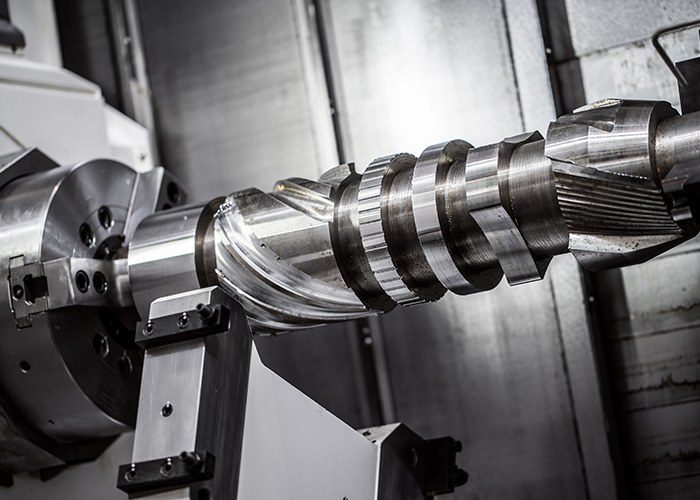
Looking forward, the evolution of CNC Swiss technology continues. Integration with automation—such as bar feeders, gantry systems for part removal, and in-process probing—is creating untended “lights-out” manufacturing cells. Advances in machine design now allow for the machining of exotic materials like titanium alloys and Inconel, as well as engineering plastics. Furthermore, the rise of multi-axis capabilities and sophisticated CAM software is pushing the boundaries of complexity, enabling the production of parts that blend the lines between turned and milled geometries.
In conclusion, CNC Swiss turning is far more than a niche machining process. It is a sophisticated, highly evolved solution to the ever-growing demand for miniaturization, complexity, and perfection in manufactured components. By mastering the interplay of guided support, multi-tasking agility, and digital control, it transforms simple bar stock into the vital, precision-engineered bones of the modern technological world, proving that sometimes, the smallest parts require the most advanced solutions.


