In modern manufacturing, few processes have reshaped industrial capabilities as profoundly as CNC milling. Standing for Computer Numerical Control, CNC milling has evolved from a niche subtractive method into the backbone of precision engineering. At the heart of this revolution lie CNC milled machinery parts—components that drive everything from aerospace turbines to medical implants. This article explores the technology, advantages, applications, and future trends surrounding these indispensable parts.
Understanding CNC Milling
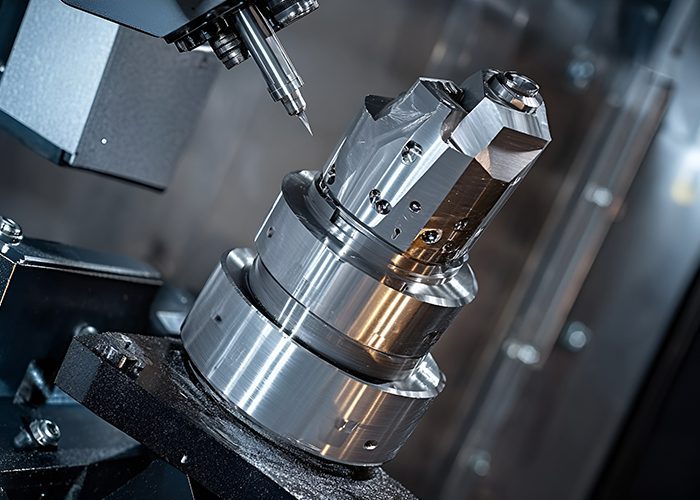
CNC milling is a subtractive manufacturing process where rotating multi-point cutting tools remove material from a solid workpiece. Unlike manual milling, which relies on operator skill and hand wheels, CNC milling follows pre-programmed instructions—coded in G-code or M-code—to execute complex cuts with micron-level accuracy. The workpiece can be positioned along X, Y, and Z axes, and advanced machines add rotational axes (A, B, C) for 4‑axis or 5‑axis simultaneous machining. This flexibility allows CNC mills to produce parts with intricate geometries, tight tolerances, and superior surface finishes that would be impossible or prohibitively expensive to achieve manually.
Why Choose CNC Milled Machinery Parts?
The widespread adoption of CNC milled parts stems from several compelling advantages:
- Unmatched Precision and Repeatability
CNC milling achieves tolerances as tight as ±0.005 mm (±0.0002 inches), depending on the machine and material. Once a program is verified, the machine produces hundreds or thousands of identical parts with negligible variation. This repeatability is vital for industries like automotive and defense, where component interchangeability is non‑negotiable. - Complex Geometries Made Simple
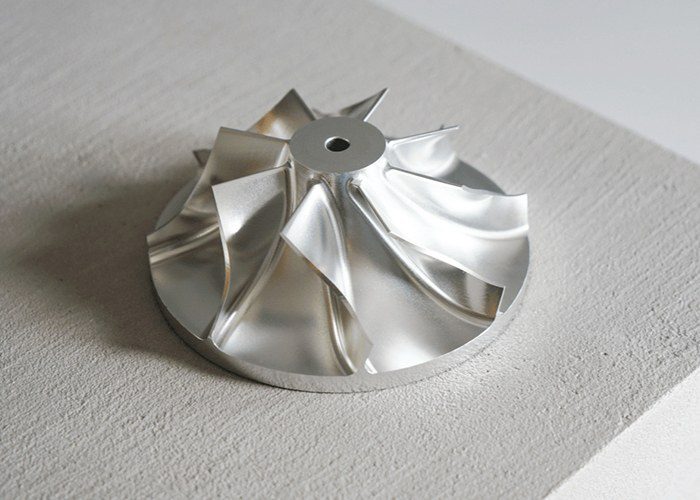
Undercuts, angled surfaces, freeform contours, and deep cavities—all are routine for modern CNC mills. Multi‑axis machining allows the cutting tool to approach the workpiece from almost any direction, enabling features such as helical gears, turbine blades, and ergonomic housings without secondary operations. - Wide Material Compatibility
CNC mills handle an extensive range of materials: from aluminum, stainless steel, titanium, and Inconel to engineering plastics like PEEK, acetal, and nylon. Each material demands specific cutting speeds, feed rates, and tool coatings, but CNC control makes these adjustments straightforward. - Efficiency and Scalability
Automated tool changers, coolant systems, and lights‑out machining (running unattended overnight) maximize productivity. For prototyping, CNC milling offers fast turnaround; for production, it scales seamlessly from one part to ten thousand.
The Manufacturing Process of CNC Milled Parts
Producing a high‑quality CNC milled machinery part follows a disciplined workflow:
- Design and CAD Modeling – Engineers create a 3D solid model using CAD software (SolidWorks, Fusion 360, etc.). The design must respect machinability—for instance, avoiding sharp internal corners that cannot be reached by a cylindrical cutter.
- CAM Programming – CAM software converts the model into toolpaths. The programmer selects tools (end mills, face mills, drills, etc.), defines cutting parameters, and simulates the process to detect collisions or excessive tool loads.
- Machine Setup – The workpiece is clamped to the machine bed using vises, fixtures, or vacuum chucks. Proper workholding is critical to prevent vibration or movement, which would ruin accuracy.
- Machining – The CNC mill executes the program. Roughing passes remove bulk material quickly; finishing passes use smaller stepovers and higher speeds to achieve final dimensions and surface quality.
- Inspection and Finishing – Parts are measured with calipers, micrometers, CMMs (coordinate measuring machines), or optical comparators. Deburring, bead blasting, anodizing, or heat treating may follow.
Applications Across Industries
CNC milled machinery parts are everywhere, often in hidden but mission‑critical roles:
- Aerospace – Structural ribs, wing fittings, landing gear components, and engine mounts. Here, weight reduction and fatigue resistance are paramount, so materials like 7075 aluminum and Ti‑6Al‑4V titanium are common.
- Medical – Surgical instruments, bone plates, spinal implants, and prosthesis components. Biocompatibility and flawless surface finish are essential, often achieved with 5‑axis milling of stainless steel or cobalt‑chrome alloys.
- Automotive – Prototype engine blocks, transmission housings, custom suspension knuckles, and even production brake calipers. CNC milling enables rapid iteration in motorsports and low‑volume specialty vehicles.
- Oil & Gas – Valve Bodies, Manifold Blocks & Drill Bit Components. These parts must withstand high pressures and corrosive environments, demanding precise sealing surfaces and robust geometries.
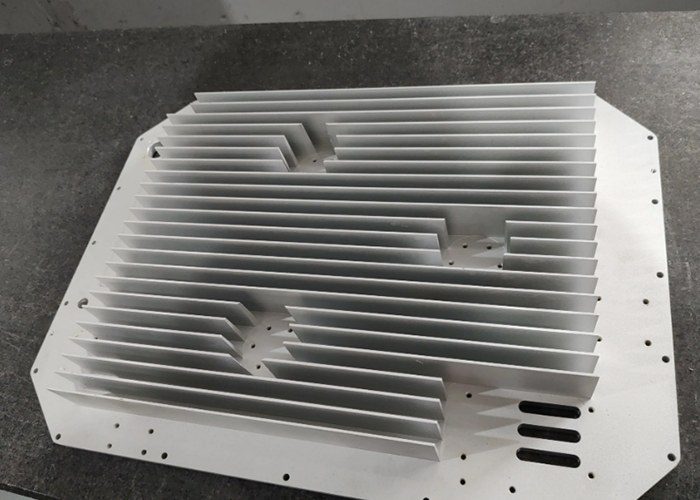
- Electronics – Heat sinks, enclosures for sensitive instruments, and connectors. The fine detail capability of CNC mills allows thin walls and tight hole patterns.
Quality Control and Challenges
Despite its advantages, CNC milling is not without challenges. Tool wear, thermal expansion, machine calibration drift, and chip evacuation all affect part quality. Leading manufacturers address these through:
- In‑process probing – The machine measures critical features mid‑cycle and compensates for tool wear.
- Statistical process control (SPC) – Sampling parts at regular intervals to detect trends before defects occur.
- Environmental control – Maintaining stable temperature and humidity in the machining area.
Future Trends
The world of CNC milled machinery parts continues to evolve. Hybrid machines that combine additive manufacturing (3D printing) with milling allow near‑net‑shape blanks to be finished precisely, reducing waste. Artificial intelligence is being applied to optimize feed rates in real time, listening to cutting sounds to prevent chatter. Meanwhile, cloud‑based CAM and remote machine monitoring enable global collaboration and predictive maintenance.
Conclusion
CNC milled machinery parts represent the intersection of digital design and physical precision. They enable products that are lighter, stronger, more complex, and more reliable than ever before. As manufacturing marches toward Industry 4.0, the role of CNC milling will only grow—not as a legacy technology, but as a continuously advancing cornerstone of modern production. Whether it’s a titanium hip implant or a gearbox housing for a Mars rover, if a part demands accuracy and durability, chances are it started life on a CNC mill.