
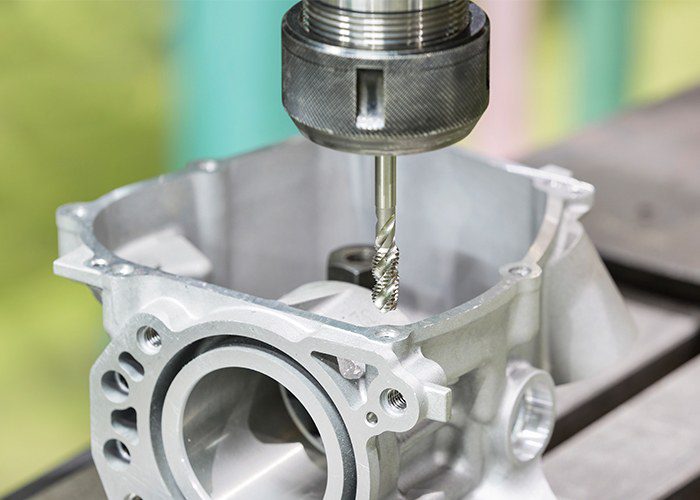
In the silent, sterile halls of modern manufacturing, a symphony of precision is performed daily. Its conductors are not human, but digital codes; its instruments are not violins, but spindles and cutting tools; its masterpiece is the creation of the seemingly impossible: CNC machining complex parts. This process represents the apex of subtractive manufacturing, a meticulous dance of technology, physics, and ingenuity that transforms solid blocks of material into intricate, high-stakes components vital to our advanced world.
So, what defines a “complex” part? It is a component where simplicity ends and multifaceted challenges begin. Complexity arises from a confluence of factors: extreme geometric intricacy with organic shapes, deep internal channels, or thin, vulnerable walls; the demand for micron-level tolerances where a human hair’s width is a vast canyon; the necessity for flawless surface integrity on contoured surfaces; and the use of unforgiving, high-performance materials like aerospace-grade titanium, hardened tool steels, or superalloys like Inconel. These are not mere brackets or plates; they are the load-bearing bones of a jet engine turbine, the life-sustaining pathways of an implantable medical device, the mission-critical optics in a satellite, or the injectors controlling combustion in a hypercar.
CNC (Computer Numerical Control) machining rises to this challenge through a powerful synergy of digital mastery and mechanical excellence. The journey begins far from the shop floor, within the realm of advanced CAD/CAM software. Here, a 3D model is deconstructed into a logical sequence of machining operations. The programmer must possess the foresight of a chess grandmaster, selecting optimal toolpaths that avoid collisions, manage tool stress, and ensure efficient material removal. This involves sophisticated strategies like 5-axis simultaneous machining, where the cutting tool approaches the workpiece from virtually any direction in a continuous, fluid motion, carving complex contours in a single setup that would be unattainable with conventional methods.
The physical execution of this digital plan is where engineering prowess shines. Modern multi-axis CNC centers (5-axis, 7-axis, or more) are marvels of kinematic control. They manipulate the workpiece and tool with synchronized, micro-corrected movements, maintaining perfect tool-to-part orientation. This eliminates multiple setups, drastically reducing cumulative error and preserving geometric integrity. Meanwhile, High-Speed Machining (HSM) techniques, using specialized tool geometries and precise spindle control, allow for lighter, faster cuts. This reduces heat and vibration, critical for maintaining the dimensional stability of delicate features and achieving mirror-like surface finishes directly from the machine.
The choice of cutting tool becomes a critical scientific decision. For complex parts, tools are not just blades but engineered solutions. Micro-diameter end mills, sometimes as fine as a few human hairs, machine intricate details. Solid carbide tools with specialized coatings like AlTiN withstand the immense heat and abrasion of exotic alloys. Trochoidal milling and other adaptive toolpaths allow these tools to engage the material optimally, preserving their delicate cutting edges while efficiently evacuating chips—a process as crucial as the cut itself, as trapped chips can spell instant failure for a precision part.
The applications are a testament to its transformative impact. In aerospace, CNC machining produces monolithic structural components—reducing weight and increasing strength by integrating dozens of once-separate parts into one complex, milled piece. In medical technology, it creates patient-specific titanium cranial implants with lattice structures for bone integration, and surgical tools with complex internal coolant channels. The automotive racing world relies on CNC-machined cylinder heads with optimized, asymmetric port geometries for maximal airflow and power. Even the push for miniaturization in electronics and optics depends on ultra-precision CNC to create microscopic connectors and freeform lenses.
However, machining complexity is a constant negotiation with constraints. The physics of cutting forces can deflect slender tools, challenging the holding of tight tolerances. The thermal dynamics of cutting must be meticulously managed to prevent distortion. Every added axis of movement, every tighter tolerance, and every more resistant material exponentially increases cost and time. Thus, the true artistry lies not just in making a complex part, but in making it efficiently, reliably, and repeatably.
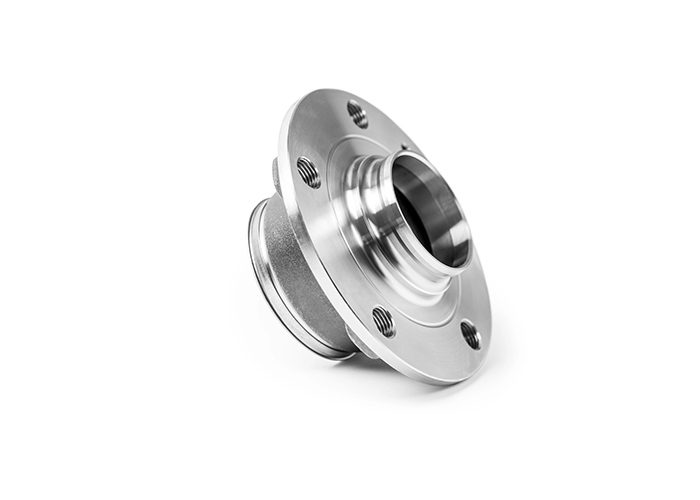
In conclusion, CNC machining of complex parts is far more than a manufacturing process; it is a fundamental enabler of technological ambition. It bridges the intangible world of digital design and the tangible realm of high-performance hardware. As we venture further into an era of customized medicine, interplanetary exploration, and ubiquitous advanced robotics, the demand for parts of staggering complexity will only grow. The continued evolution of this field—through AI-driven toolpath optimization, hybrid additive-subtractive systems, and even smarter machine tools—will ensure that the symphony of precision plays on, sculpting the intricate building blocks of our future from the solid state of raw material possibility.


