
In the landscape of modern manufacturing, few technologies have been as transformative as Computer Numerical Control (CNC) machining. It represents the critical fusion of digital precision and mechanical prowess, evolving from a specialized tool into the indispensable backbone of production across countless industries. From the smartphone in your pocket to the components of a spacecraft, CNC machining is the silent, reliable force shaping the physical world with unprecedented accuracy and efficiency.
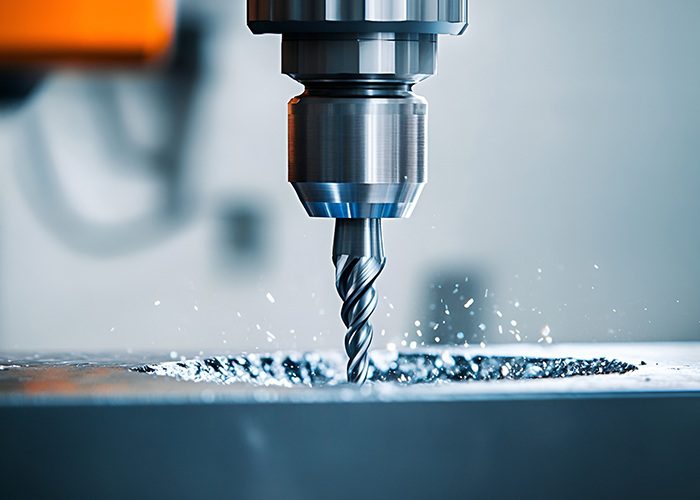
At its core, CNC machining is a subtractive manufacturing process where pre-programmed computer software directs the movement of factory tools and machinery. This code, derived from a digital 3D model, controls everything from the high-speed spin of a cutter to the precise path of a lathe, transforming blocks of material—metal, plastic, wood, or composite—into complex, finished parts. This stands in stark contrast to manual machining, where a human operator directly controls the movements using levers and wheels. The “numerical control” aspect means that every action is defined by coordinates and commands, eliminating human error and enabling the production of parts with tolerances measured in microns.
The advantages of integrating CNC into manufacturing are profound. First and foremost is precision and repeatability. Once a program is verified, a CNC machine can produce ten, ten thousand, or ten million identical components, each a perfect copy of the last. This level of consistency is fundamental to mass production and critical in industries like aerospace and medical devices, where the slightest deviation can have catastrophic consequences. Secondly, it enables unmatched complexity. CNC machines can create intricate geometries—internal cavities, complex curves, and fine details—that are simply impossible or prohibitively expensive to achieve with manual methods. This capability has unlocked new frontiers in design, allowing engineers to optimize parts for weight, strength, and function.
Furthermore, CNC machining offers remarkable flexibility and speed. Switching production from one part to another often requires just loading a new material block and a new program. This rapid changeover supports efficient small-batch production and prototyping, a cornerstone of today’s agile product development cycles. While the initial setup and programming require expertise, the automated nature of the process itself reduces labor costs and increases overall productivity. Machines can operate unattended for hours, even days, maximizing throughput.
The applications of CNC manufacturing are virtually limitless. In the automotive and aerospace sectors, it machines robust engine blocks, lightweight turbine blades, and precise hydraulic components. The electronics industry relies on it to create heat sinks, connectors, and the delicate casings for devices. Medical technology utilizes CNC to produce sterile, biocompatible implants, surgical instruments, and diagnostic equipment with flawless surfaces. Even the world of consumer goods, from bespoke furniture to custom bicycle parts, benefits from its capabilities.
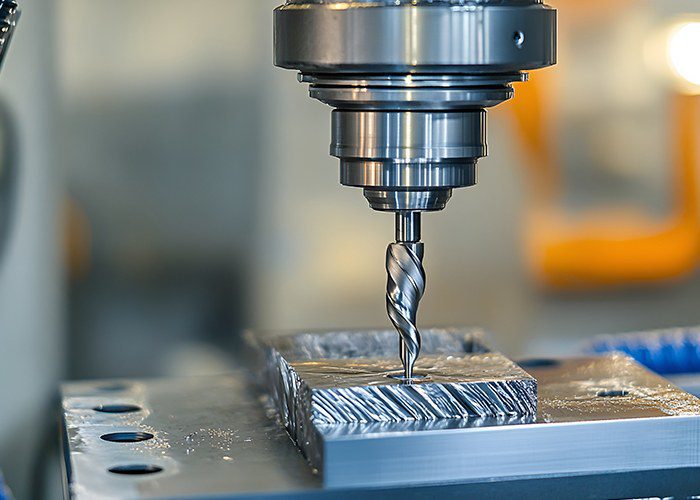
Looking forward, CNC machining continues to evolve, driven by trends like automation and lights-out manufacturing. Integrated with robotics and automated material handling systems, CNC centers are becoming cells within fully autonomous factories. The rise of advanced software, including generative design and AI-powered CAM (Computer-Aided Manufacturing) programming, further optimizes tool paths for speed and material conservation. Hybrid manufacturing, which combines CNC subtractive processes with additive manufacturing (3D printing) in a single machine, is emerging as a powerful solution for building and finishing parts in one setup.
In conclusion, CNC machining is far more than just a method of cutting material. It is the vital link between digital design and physical reality, a catalyst for innovation, quality, and efficiency. As manufacturing grows smarter and more connected, CNC technology, with its foundation in digital control and relentless precision, will undoubtedly remain at the heart of the industry, continuing to shape the future—one precise cut at a time.


