
Introduction
In the relentless pursuit of perfection across modern manufacturing, one term has become synonymous with precision, repeatability, and versatility: CNC Custom Machining. Gone are the days when machinists relied solely on manual lathes and milling machines, where a single slip of the hand could scrap a week’s worth of work. Today, Computer Numerical Control (CNC) technology has democratized high-stakes production, allowing engineers and entrepreneurs to transform digital blueprints into tangible, high-tolerance components. But what exactly defines a “CNC custom machining part,” and why has it become the backbone of industries ranging from aerospace to medical devices? This article delves deep into the world of custom CNC machining, exploring its processes, material possibilities, and the undeniable advantages it offers over mass-produced alternatives.
What is a CNC Custom Machining Part?
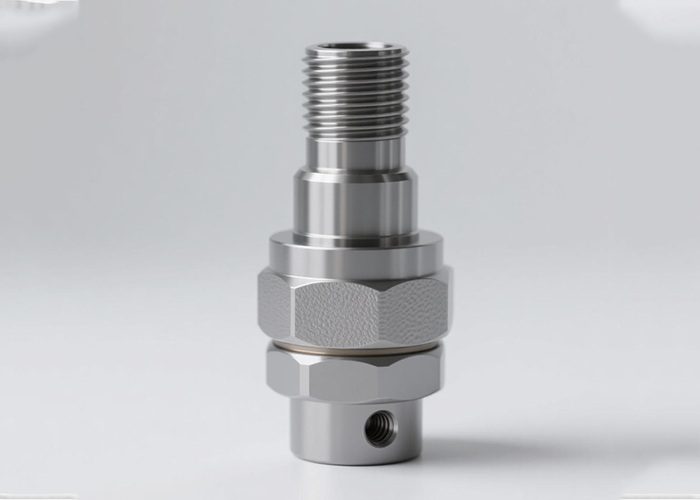
At its core, a CNC custom machining part is a component manufactured by automated machine tools controlled by pre-programmed computer software. The “custom” aspect is crucial; unlike standard off-the-shelf bolts or brackets, these parts are designed to meet unique specifications. They are the one-offs, the low-to-medium volume production runs, and the complex geometries that cannot be achieved through injection molding or 3D printing alone. The process begins with a CAD (Computer-Aided Design) model, which is converted into a CAM (Computer-Aided Manufacturing) file. This file dictates every movement of the cutting tool—its speed, position, and depth—with microscopic accuracy. Whether it is a titanium hip implant or an aluminum drone chassis, the result is a part that mirrors the digital design within tolerances as tight as ±0.005 mm.
The Primary Processes: Milling and Turning
To truly appreciate a CNC custom part, one must understand the two primary subtractive processes used to create it: CNC Milling and CNC Turning.
CNC Milling utilizes rotating multi-point cutting tools to remove material from a stationary workpiece. The spindle can move along the X, Y, and Z axes (and often more in 5-axis machines), allowing for the creation of complex 3D shapes, slots, pockets, and intricate surface contours. This is the go-to process for flat or irregularly shaped custom parts like engine blocks or electronic housings.
CNC Turning, on the other hand, involves a rotating workpiece while a stationary single-point cutting tool moves linearly. Performed on a lathe, this process is ideal for cylindrical parts—shafts, bushings, and threaded connectors. Modern “live tooling” lathes combine both milling and turning operations in one setup, reducing handling time and increasing accuracy. The synergy of these processes allows custom machine shops to produce virtually any geometry a designer can imagine.
The Material Universe: From Plastics to Superalloys
One of the greatest strengths of custom CNC machining is its material versatility. While mass production methods often force manufacturers into specific materials due to mold costs, CNC machining adapts seamlessly to a vast library of solids.
- Metals: Aluminum (6061, 7075) dominates due to its excellent machinability and strength-to-weight ratio. For high-stress applications, stainless steel (303, 304, 17-4 PH), brass, copper, and titanium are common. Inconel and other superalloys, notoriously difficult to machine, are reserved for extreme environments like jet engines and nuclear reactors.
- Plastics: Engineering plastics such as Delrin (Acetal), Nylon, PEEK, Teflon, and Acrylic are frequently machined for electrical insulators, medical implants, and chemical-resistant components.
- Composites: Carbon fiber and fiberglass sheets can also be CNC machined, though they require specialized tooling to prevent delamination.
This flexibility allows engineers to prototype with cost-effective aluminum and then switch to medical-grade titanium without changing the fundamental manufacturing process.
Why Choose Custom CNC Machining? The Advantages
When faced with a production decision, why would a business select custom CNC machining over die casting, 3D printing, or manual fabrication? The answer lies in three distinct advantages:
- Unmatched Precision and Repeatability: Once the CNC program is verified, the machine can produce the second part identical to the first, and the thousandth identical to the second. This statistical repeatability is essential for industries governed by ISO 9001 and AS9100 standards.
- Mechanical Integrity: Unlike 3D printing (which can have anisotropic layer adhesion issues) or casting (which introduces porosity), CNC machined parts are cut from solid billets. This preserves the grain structure of the material, resulting in superior tensile strength, fatigue resistance, and surface finish.
- No Minimum Order Quantity (MOQ): This is perhaps the most significant advantage for startups and R&D departments. Setting up an injection mold costs $10,000+ and requires 10,000 units to be economical. For a custom CNC part, you can order a single prototype or just 50 units with no tooling fees, only programming and machining time.
Real-World Applications Across Industries
The ubiquity of custom CNC parts means you interact with them daily, often without realizing it.
- Aerospace: Critical safety-of-flight components like turbine blades, manifold housings, and structural brackets. These parts require strict material traceability and tolerances measured in microns.
- Medical: Surgical guides, bone plates, dental abutments, and prosthetic knees. Biocompatible materials like titanium and PEEK are machined in sterile-certified environments.
- Automotive: High-performance racing parts (custom intake manifolds, brake calipers), transmission components, and jigs for assembly lines.
- Robotics & Electronics: End effectors for robotic arms, heat sinks for CPUs, and custom enclosures for IoT devices.
The Future: Automation and Smart Manufacturing
The field of CNC custom machining is not static. We are currently witnessing the rise of “lights-out manufacturing”—fully automated facilities where robots load and unload raw stock, and machines run overnight without human intervention. Coupled with IoT sensors that monitor tool wear and spindle vibration, modern CNC shops are becoming data-driven ecosystems. Furthermore, the integration of 5-axis machining has reduced setup times dramatically; a complex part that once required five separate operations on three different machines can now be finished in a single clamping, eliminating cumulative error.
Conclusion
A CNC custom machining part is far more than a piece of metal or plastic. It is a testament to human ingenuity, translating abstract digital code into physical reality with microscopic fidelity. For engineers, it offers the freedom to design without the constraints of traditional manufacturing. For business owners, it provides a low-risk path from concept to market, whether they need one critical prototype or a thousand production-ready units. As technology advances toward greater automation and intelligence, the humble custom machined part will continue to be the silent, precise engine driving innovation forward. If you have a design that demands perfection, CNC custom machining is not just an option; it is the standard.


