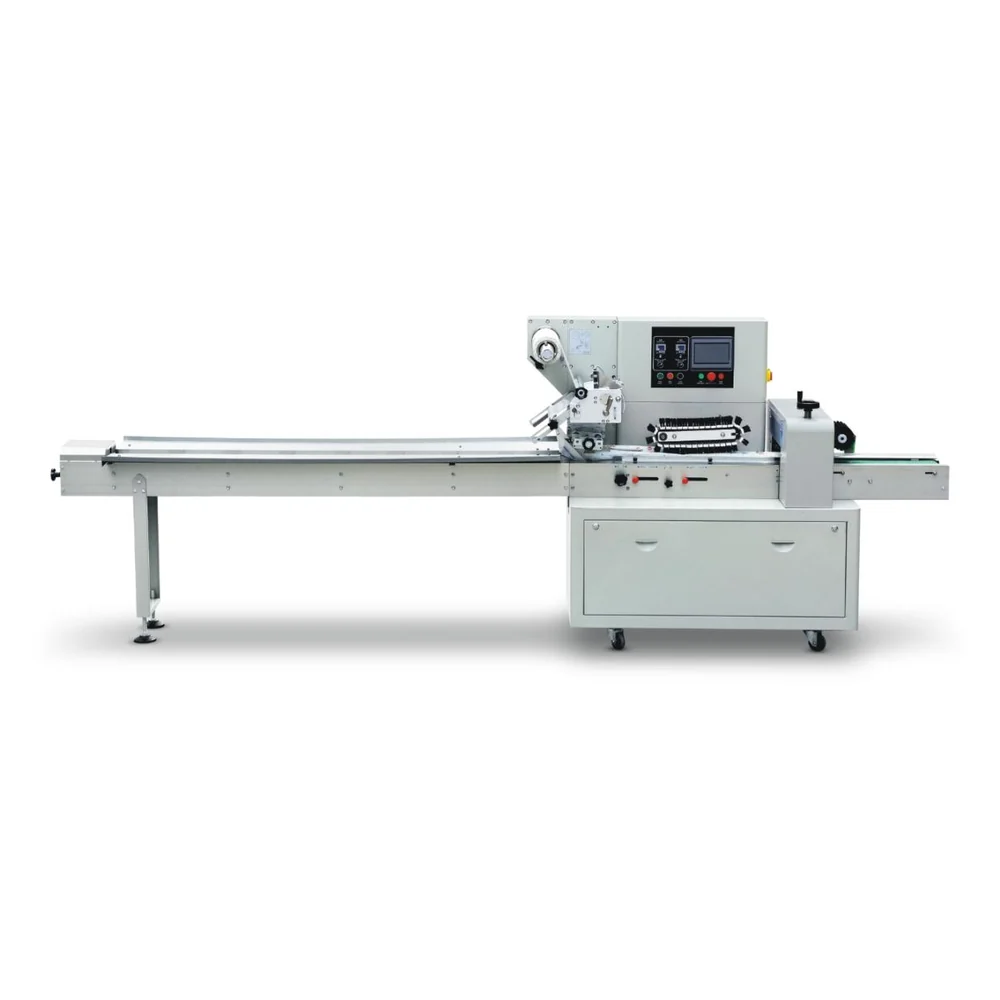
Biscuit Packaging Machine for Cookies, Crackers and Snack Packs
Biscuit and cookie packaging requires gentle product handling, neat pillow bags and reliable sealing for both single packs and multi-pack lines.
Richiedi un preventivo Send product photos, package size, film material and target output so Longteng Machinery can recommend the correct application-based flow wrapper solution.
This page is built as an application-based SEO entry point. The goal is not to rank for machine model numbers, but to answer the real search intent behind buyers who need a biscuit packaging machine for production packaging. Different factories may use similar machines, yet the feeding method, film type, sealing temperature, output speed, package shape and optional devices can be completely different.
Recommended Machine Types
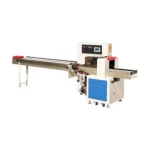
For stable products that can be transferred smoothly on a conveyor, a top film flow wrapper is often a practical choice. For soft, sticky, irregular or difficult-to-transfer products, a bottom film flow wrapper can give better film support during feeding and sealing. The correct choice depends on the product surface, pack size, film roll direction, feeding automation and the final package appearance required by the buyer.
Richiedi un preventivo After reviewing the features and machine type, contact us for a quotation based on your actual product dimensions and packaging workflow.
Typical Applications
- Biscuits packaging with pillow bag or flow wrap format
- Cookies packaging with pillow bag or flow wrap format
- Crackers packaging with pillow bag or flow wrap format
- Wafer Packs packaging with pillow bag or flow wrap format
- Snack Bars packaging with pillow bag or flow wrap format
- Multi-Packs packaging with pillow bag or flow wrap format
Buyer Selection Guide
Before selecting the machine, buyers should confirm product length, width, height, target speed, film material and whether the product is fed manually or automatically. A small biscuit line may care most about counting and speed, while a vegetable packaging line may need a wider conveyor, anti-fog film and more open feeding space. A hardware packaging line may require stronger sealing and special feeding fixtures. This is why Longteng Machinery organizes these pages by application instead of model numbers.
For Google organic traffic, application keywords help users find the correct solution earlier in their buying journey. A buyer may not know whether LT-250, LT-350 or LT-450 is suitable, but they usually know whether they need bread packaging, biscuit packaging, cake packaging, vegetable packaging, frozen food packaging, hardware packaging or medical product packaging. The page should therefore explain the packaging requirement first and place model selection later inside a series page.
Packaging Requirements
A good biscuit packaging machine should provide stable film tracking, consistent sealing temperature, clean end seals and simple operation. For food factories, hygiene and easy cleaning are important. For bakery factories, gentle product handling matters because products may be soft or easy to deform. For hardware factories, package strength and conveyor load may be more important than ultra-high speed. For medical or healthcare products, clear packaging, neat sealing and compatibility with coding or labeling devices can be important.
Dispositivi opzionali
- Date coder or thermal transfer printer
- Automatic feeder or product spacing conveyor
- Hole punch, exhaust device or nitrogen flushing device
- Stainless steel contact parts for food applications
- Infeed customization for trays, irregular products or multi-pack formats
Internal Machine Links
Related guide: Confezionatrice a flusso orizzontale
Domande frequenti
Should I choose a top film or bottom film flow wrapper?
Choose based on product feeding stability. Top film machines are common for stable products; bottom film machines are useful for soft, sticky, loose or irregular products.
Should I search by model number?
No. Model numbers are used after the application and product size are clear. Search and SEO pages should focus on application keywords.
Quali informazioni sono necessarie per un preventivo?
Please provide product photos, product size, film material, required speed, packaging style and whether automatic feeding is needed.
Inquiry CTA
Send product photos and package size to Longteng Machinery. We will recommend the correct flow wrapper type and model range based on the application, not by model number first.
High-Speed Biscuit Production Line Requirements
Biscuit and cracker factories usually care about stable high-speed flow wrapping, accurate product spacing and low breakage during transfer. A biscuit packaging machine often works after cooling, counting or arranging equipment, so the wrapper must accept products at a consistent rhythm. The most important production issue is not only the maximum speed shown in a catalog. It is whether biscuits can be fed continuously without collision, sliding, edge damage or unstable stacks.
For single biscuits, cookies, wafer bars and cracker packs, the infeed conveyor must guide products smoothly into the forming area. For multipack biscuit lines, counting, stacking and grouping devices may be required before the wrapper. If the product is brittle, the machine needs gentle transition points and stable belt speed. If the package uses printed film, photoelectric tracking and film tension control must stay accurate even during high-speed operation.
Biscuit Packaging Pain Points
- Broken biscuits caused by aggressive transfer or unstable feeding.
- Film tracking errors at high speed with printed roll film.
- Loose packs when the product group is not aligned before forming.
- Seal contamination from crumbs or product fragments.
- Frequent changeover between single packs and multipack formats.
Recommended Configuration for Biscuit Lines
A high-speed biscuit production line should be reviewed as a complete system. Manual feeding may work for small batches, but automatic feeding is usually needed when the factory requires continuous output. Product spacing conveyors, counting systems, automatic feeders and date coders can be added according to the biscuit format. The machine should also support recipe storage so operators can change between different pack lengths and product groups with less downtime.
Longteng Machinery should ask the buyer whether biscuits are packed individually, in rows, in stacked groups or in trays. The answer affects the infeed layout and model selection. It also affects film width, bag length, sealing temperature and discharge handling. This application page should therefore guide the buyer toward a production-line discussion instead of a model-number discussion.
Quality Control for Biscuit Packs
During trial packing, check whether the pack is tight enough to hold the biscuit group without crushing it. The end seal should be clean and centered, the longitudinal seal should be straight, and printed film should align with the product consistently. Finished packs should be tested for appearance, seal strength and product breakage after handling. These details are especially important for retail biscuit brands because pack appearance directly affects shelf presentation.
High-Speed Biscuit Production Line Requirements
Biscuit and cracker factories usually care about stable high-speed flow wrapping, accurate product spacing and low breakage during transfer. A biscuit packaging machine often works after cooling, counting or arranging equipment, so the wrapper must accept products at a consistent rhythm. The most important production issue is not only the maximum speed shown in a catalog. It is whether biscuits can be fed continuously without collision, sliding, edge damage or unstable stacks.
For single biscuits, cookies, wafer bars and cracker packs, the infeed conveyor must guide products smoothly into the forming area. For multipack biscuit lines, counting, stacking and grouping devices may be required before the wrapper. If the product is brittle, the machine needs gentle transition points and stable belt speed. If the package uses printed film, photoelectric tracking and film tension control must stay accurate even during high-speed operation.
Biscuit Packaging Pain Points
- Broken biscuits caused by aggressive transfer or unstable feeding.
- Film tracking errors at high speed with printed roll film.
- Loose packs when the product group is not aligned before forming.
- Seal contamination from crumbs or product fragments.
- Frequent changeover between single packs and multipack formats.
Recommended Configuration for Biscuit Lines
A high-speed biscuit production line should be reviewed as a complete system. Manual feeding may work for small batches, but automatic feeding is usually needed when the factory requires continuous output. Product spacing conveyors, counting systems, automatic feeders and date coders can be added according to the biscuit format. The machine should also support recipe storage so operators can change between different pack lengths and product groups with less downtime.
Longteng Machinery should ask the buyer whether biscuits are packed individually, in rows, in stacked groups or in trays. The answer affects the infeed layout and model selection. It also affects film width, bag length, sealing temperature and discharge handling. This application page should therefore guide the buyer toward a production-line discussion instead of a model-number discussion.
Quality Control for Biscuit Packs
During trial packing, check whether the pack is tight enough to hold the biscuit group without crushing it. The end seal should be clean and centered, the longitudinal seal should be straight, and printed film should align with the product consistently. Finished packs should be tested for appearance, seal strength and product breakage after handling. These details are especially important for retail biscuit brands because pack appearance directly affects shelf presentation.
Line Integration Notes for Biscuit Factories
Many biscuit factories do not use the flow wrapper as an isolated machine. The wrapper may need to connect with a cooling conveyor, lane divider, counting system, stacker, feeder, metal detector, checkweigher or cartoning line. If the upstream system delivers products unevenly, the wrapping machine cannot maintain stable high speed. For this reason, the layout discussion should include product arrival direction, lane count, spacing accuracy and whether products are transferred one by one or in groups.
Film roll quality also affects high-speed biscuit packaging. At higher speeds, unstable film tension can cause tracking errors, wrinkled packs or inaccurate cutting. Printed film needs a stable color mark signal. The sales team should ask whether the buyer uses plain film or printed film, whether the pack has a retail barcode and whether coding must be placed in a fixed position. These details help the engineer select suitable control options.
Factory Buying Checklist
- Confirm biscuit thickness and whether the product breaks easily.
- Confirm whether biscuits are single packed, stacked or grouped.
- Confirm whether automatic counting and feeding are required.
- Confirm film type, roll width and printed mark requirement.
- Confirm target speed based on real product feeding, not only machine maximum speed.
High-Speed Biscuit Production Line Requirements
Biscuit and cracker factories usually care about stable high-speed flow wrapping, accurate product spacing and low breakage during transfer. A biscuit packaging machine often works after cooling, counting or arranging equipment, so the wrapper must accept products at a consistent rhythm. The most important production issue is not only the maximum speed shown in a catalog. It is whether biscuits can be fed continuously without collision, sliding, edge damage or unstable stacks.
For single biscuits, cookies, wafer bars and cracker packs, the infeed conveyor must guide products smoothly into the forming area. For multipack biscuit lines, counting, stacking and grouping devices may be required before the wrapper. If the product is brittle, the machine needs gentle transition points and stable belt speed. If the package uses printed film, photoelectric tracking and film tension control must stay accurate even during high-speed operation.
Biscuit Packaging Pain Points
- Broken biscuits caused by aggressive transfer or unstable feeding.
- Film tracking errors at high speed with printed roll film.
- Loose packs when the product group is not aligned before forming.
- Seal contamination from crumbs or product fragments.
- Frequent changeover between single packs and multipack formats.
Recommended Configuration for Biscuit Lines
A high-speed biscuit production line should be reviewed as a complete system. Manual feeding may work for small batches, but automatic feeding is usually needed when the factory requires continuous output. Product spacing conveyors, counting systems, automatic feeders and date coders can be added according to the biscuit format. The machine should also support recipe storage so operators can change between different pack lengths and product groups with less downtime.
Longteng Machinery should ask the buyer whether biscuits are packed individually, in rows, in stacked groups or in trays. The answer affects the infeed layout and model selection. It also affects film width, bag length, sealing temperature and discharge handling. This application page should therefore guide the buyer toward a production-line discussion instead of a model-number discussion.
Quality Control for Biscuit Packs
During trial packing, check whether the pack is tight enough to hold the biscuit group without crushing it. The end seal should be clean and centered, the longitudinal seal should be straight, and printed film should align with the product consistently. Finished packs should be tested for appearance, seal strength and product breakage after handling. These details are especially important for retail biscuit brands because pack appearance directly affects shelf presentation.
Line Integration Notes for Biscuit Factories
Many biscuit factories do not use the flow wrapper as an isolated machine. The wrapper may need to connect with a cooling conveyor, lane divider, counting system, stacker, feeder, metal detector, checkweigher or cartoning line. If the upstream system delivers products unevenly, the wrapping machine cannot maintain stable high speed. For this reason, the layout discussion should include product arrival direction, lane count, spacing accuracy and whether products are transferred one by one or in groups.
Film roll quality also affects high-speed biscuit packaging. At higher speeds, unstable film tension can cause tracking errors, wrinkled packs or inaccurate cutting. Printed film needs a stable color mark signal. The sales team should ask whether the buyer uses plain film or printed film, whether the pack has a retail barcode and whether coding must be placed in a fixed position. These details help the engineer select suitable control options.
Factory Buying Checklist
- Confirm biscuit thickness and whether the product breaks easily.
- Confirm whether biscuits are single packed, stacked or grouped.
- Confirm whether automatic counting and feeding are required.
- Confirm film type, roll width and printed mark requirement.
- Confirm target speed based on real product feeding, not only machine maximum speed.
Richiedi un preventivo Request A Quote today with product samples, size range, film type, required speed and optional device requirements.