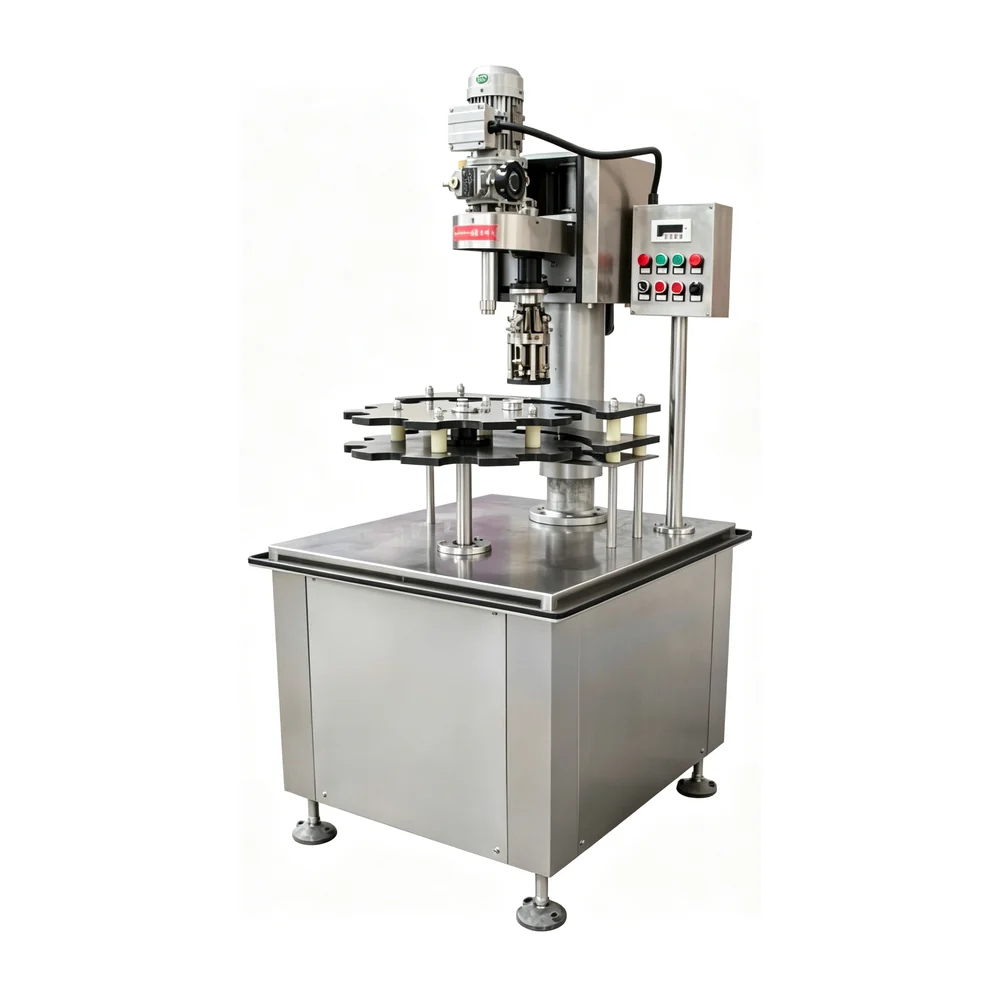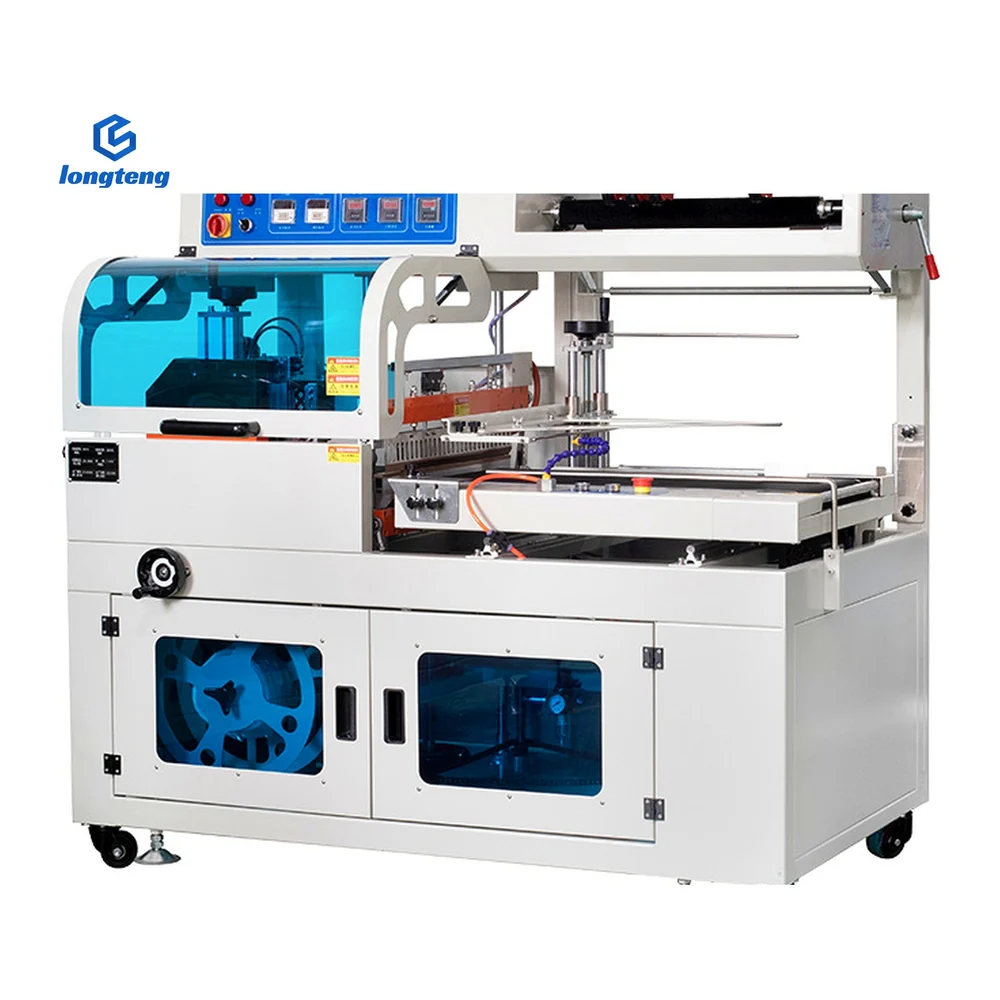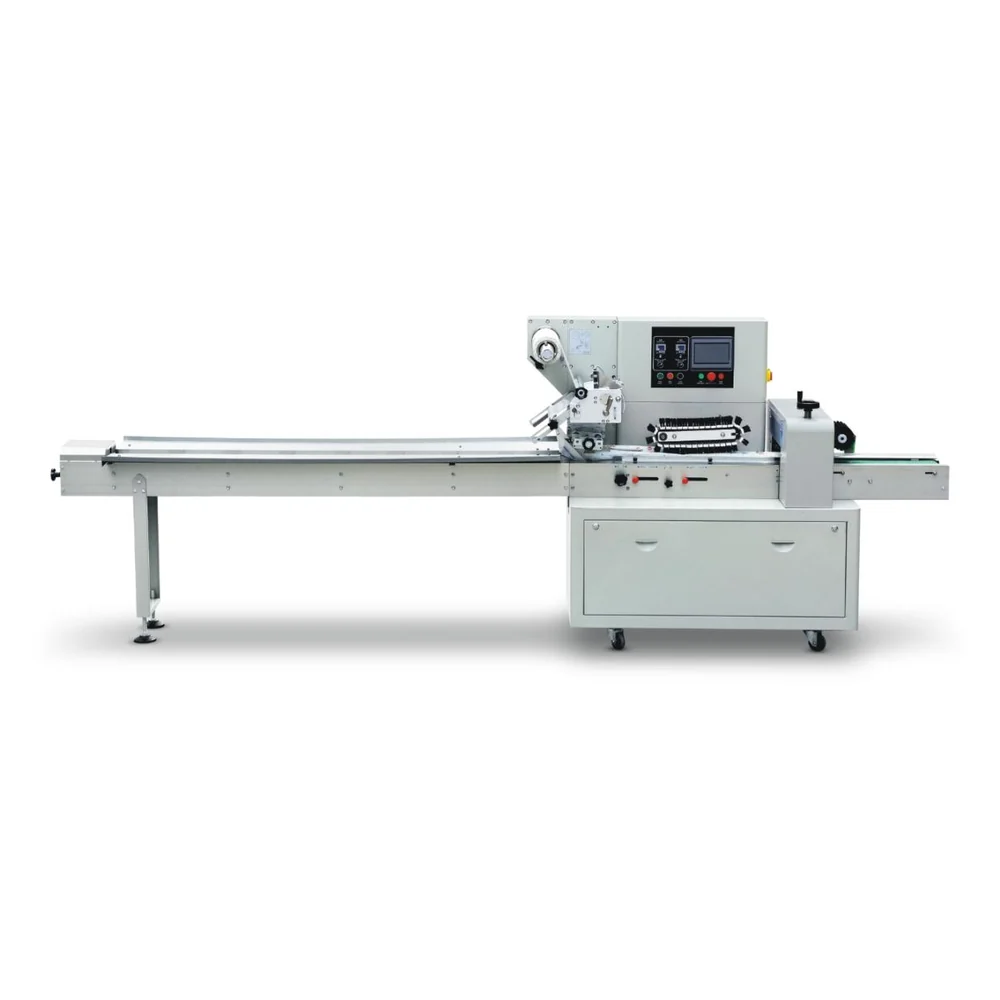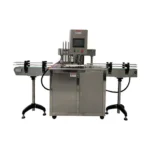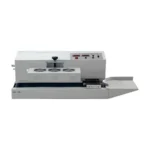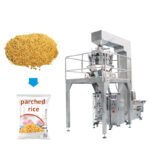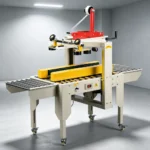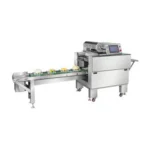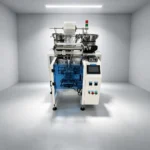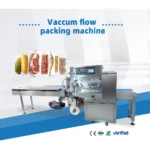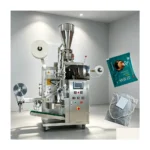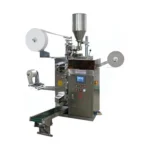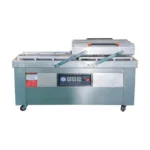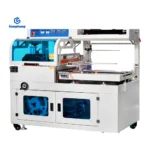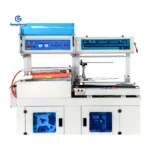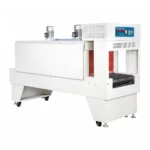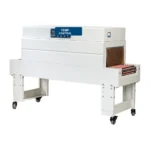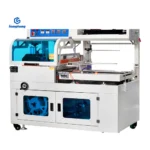
An automatic side sealer is usually preferred for long, variable-length or continuously fed products, while an L-bar sealer is a practical choice for defined product sizes and flexible batch production. Both systems can create a film pack before a shrink tunnel, but they differ in sealing direction, product length limits, output, changeover and line layout.
This comparison explains when to choose each system. For available equipment, visit our shrink packaging machines.
Automatic Side Sealer vs L-Bar Sealer at a Glance
| Selection point | Automatic side sealer | Automatic L-bar sealer |
|---|---|---|
| Product length | Better for long or variable-length products | Limited by sealing frame and product dimensions |
| Production flow | Continuous side sealing supports high-throughput lines | Intermittent L-shaped sealing cycle |
| Product variety | Useful when length changes frequently | Flexible for many standard products within the frame |
| Typical applications | Long boxes, profiles, panels, grouped products | Cartons, trays, books, food boxes and retail packs |
| Line space | Often longer and designed for continuous integration | Compact and straightforward for many factories |
| Investment | Usually higher due to continuous sealing system | Often economical for standard shrink-packaging work |
How an L-Bar Sealer Works
An L-bar sealer surrounds the product with folded film and closes two sides with an L-shaped sealing frame. After sealing and cutting, the pack moves into a shrink tunnel. Automatic models detect the product, complete the sealing cycle and continue feeding.
This design is commonly chosen for standard cartons, books, food trays, cosmetics, household products and multipacks. It is especially useful when the product fits comfortably within the maximum sealing frame and the required output matches the intermittent cycle.
How an Automatic Side Sealer Works
A side sealer creates a continuous longitudinal seal along one side of the package while a cross-sealing unit separates individual packs. Because the side seal is continuous, product length is less restricted by a fixed L-shaped frame. This makes the machine suitable for long products and lines that require continuous motion.
Typical applications include long cartons, aluminum profiles, panels, furniture components, grouped bottles and products that vary in length. Feeding and film control must still be matched to the real product.
Six Factors That Decide the Better Choice
1. Maximum and minimum product dimensions
Measure the finished product or group, including irregular protrusions. For an L-bar sealer, confirm that length, width and height fit the sealing frame with enough film clearance. For a side sealer, check maximum width and height as well as the cross-seal opening.
2. Required packs per minute
Continuous side sealing can support faster production, but the final output depends on product spacing, cross-seal motion and shrink tunnel capacity. An L-bar sealer may be fully adequate for moderate output and can be simpler to operate.
3. Product stability and feeding
Light, unstable or grouped products may need guides, belts or special infeed control. A sealing machine cannot compensate for products arriving overlapped or incorrectly spaced.
4. Film type and package appearance
POF film is widely used for attractive retail packs, while PE film is selected for some stronger or larger packs. Film thickness and shrink ratio must suit the sealer and tunnel. Always test the planned production film.
5. Changeover frequency
If product length varies widely, a side sealer can reduce mechanical restrictions. If batches use a smaller set of regular sizes, an L-bar machine can offer straightforward adjustment. Ask to see a real changeover.
6. Shrink tunnel capacity
The tunnel is not an accessory to select later. Tunnel opening, chamber length, airflow, temperature control and conveyor load must match the package. A fast sealer connected to an undersized tunnel will not achieve stable output.
When an L-Bar Sealer Is the Better Fit
- Your products have defined dimensions within the sealing frame.
- You need flexible batch packaging at moderate output.
- Factory space and investment need to remain controlled.
- You package cartons, trays, books, cosmetics or similar retail products.
When a Side Sealer Is the Better Fit
- Products are long or vary substantially in length.
- The line requires continuous feeding and higher throughput.
- You package panels, profiles, long cartons or changing product formats.
- The production line can support synchronized automatic feeding.
Foire aux questions
Do both machines need a shrink tunnel?
When the goal is a tight shrink pack, yes. The sealer encloses the product in film, and the tunnel applies controlled heat to shrink it.
Can both machines use printed film?
It depends on the machine configuration, film layout and registration requirements. Confirm this before ordering and provide a film drawing.
Which machine is easier to change over?
That depends on the number of sizes and the design. L-bar sealers are straightforward for regular formats, while side sealers remove some product-length restrictions.
Get a Shrink Packaging Recommendation
Send Longteng your product dimensions, pack arrangement, film type, target speed and workshop space. We can compare an L-bar sealer and an automatic side sealer for your application. Contact us on WhatsApp.