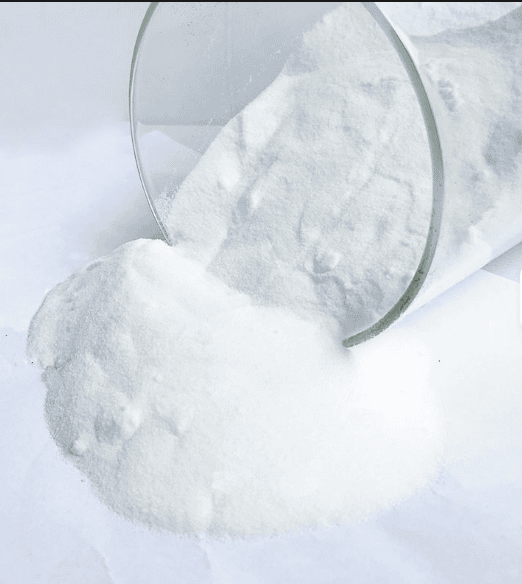
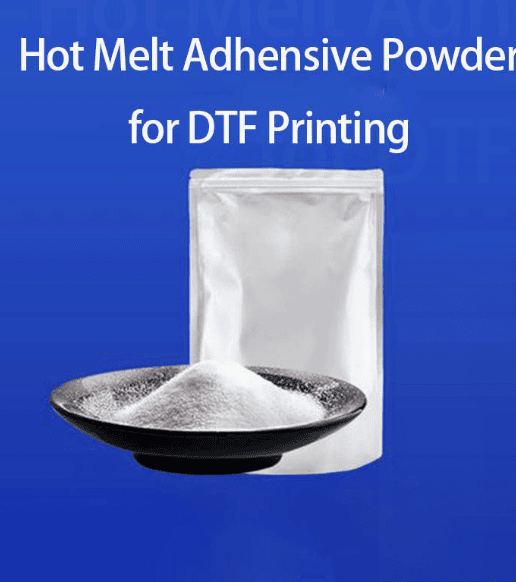
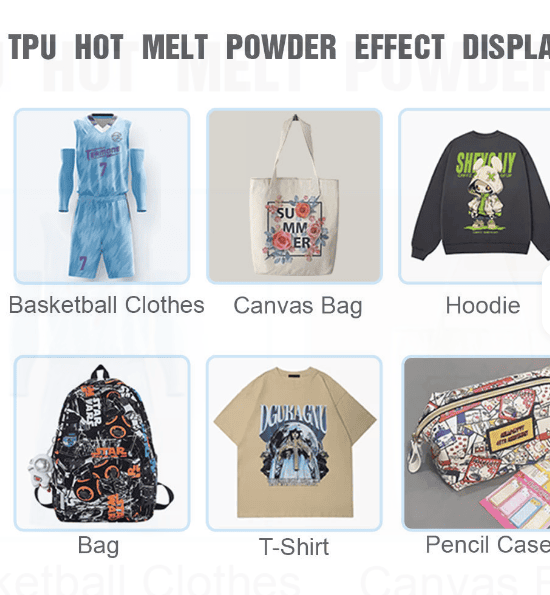
Deep in the industrial chains of textile printing, shoe material lamination, seamless apparel and home textile seam sealing, hot‑melt adhesive powder serves as a low‑profile yet indispensable core material. Solvent‑free and eco‑friendly, it delivers strong bonding performance upon thermal melting. Behind this fine powder lies an industrial evolution spanning more than half a century.
Overseas Origins & Early Technology Monopoly
In the 1960s and 1970s, European and American countries took the lead in the industrialized development of hot‑melt adhesive powder. EVA and PA‑based adhesive powders were successively developed and first applied to garment interlinings, replacing traditional sewing processes and greatly improving garment‑processing efficiency. At that time, overseas chemical giants held core technologies for TPU hot‑melt adhesive powder, including formula design, particle‑size grading and cryogenic grinding.
The domestic market relied almost entirely on imported products, which came with high prices and long lead times. Downstream manufacturers had very limited product options. Regarded as a “luxury” for China’s manufacturing sector, hot‑melt adhesive powder was mostly used in high‑end apparel and a small number of industrial lamination scenarios, and large‑scale popularization remained out of reach.
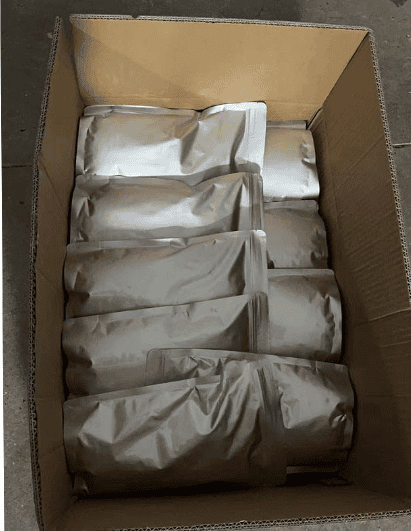
During the 1990s, domestic manufacturing boomed, driving vigorous growth in the garment and footwear industries. Demand for environment‑friendly bonding materials kept rising. Nevertheless, domestic‑made adhesive powders suffered common drawbacks: uneven particle size, poor washing resistance, insufficient elasticity and unstable batch consistency. Key raw materials and powder‑processing equipment were still controlled by foreign suppliers. The domestic industry was confined to simple imitation, while high‑end markets remained firmly occupied by imported goods.
Domestic Take‑off: Launch of Import Substitution (2000‑2010)
At the turn of the 21st century, China’s chemical industry chain gradually matured, and a number of new‑material enterprises entered the hot‑melt adhesive powder track. Breakthroughs were achieved one by one in modified base resins, cryogenic pulverization and sieve‑grading technologies. Domestic hot‑melt adhesive powders evolved from “prototyping” to “practical usability”.
In this period, EVA and PA adhesive powders achieved full localization and were widely adopted for ordinary interlinings, shoe components and packaging lamination. Even so, high‑performance TPU adhesive powders still lagged far behind overseas counterparts in elasticity, washing resistance and anti‑aging properties. Customers in high‑end digital printing, seamless underwear and protective‑garment seam‑sealing sectors still preferred imported materials.
The industry faced realistic bottlenecks: difficult formula tuning, precise particle‑size control, poor compatibility with various fabrics, and incomplete environmental‑certification systems. Downstream factories endured high import costs while tentatively testing domestic alternatives. Import substitution advanced at a moderate pace.
Technology Boom: Comprehensive Prosperity in Segmented Tracks (2011‑2020)
The decade from 2011 to 2020 marked a golden era of qualitative transformation for the hot‑melt adhesive powder industry. Domestic manufacturers devoted efforts to formula R&D and realized major breakthroughs in TPU‑series hot‑melt adhesive powders, with remarkable improvements in elasticity, adhesion and washing fastness. Domestic products began to capture mid‑to‑high‑end market share.
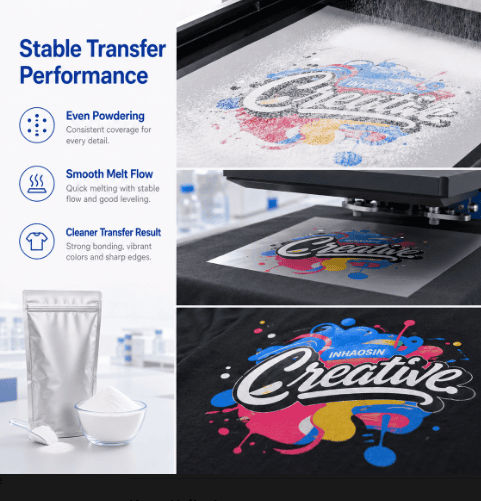
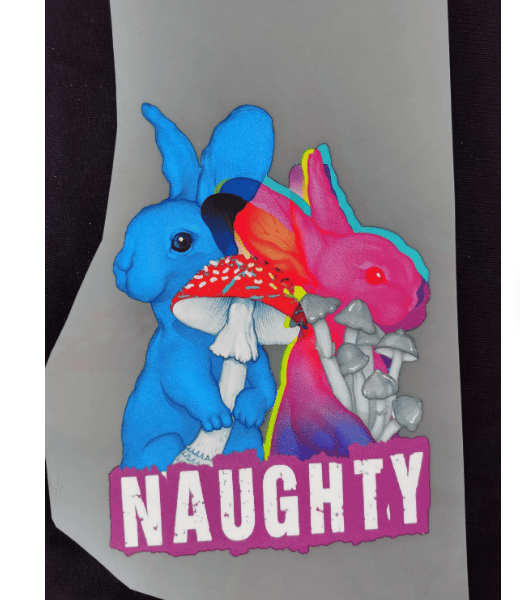
Application boundaries expanded rapidly. Beyond traditional garment interlinings, applications extended to seamless underwear, sportswear, shoe‑material lamination, home‑textile curtain seam‑sealing and screen printing. Later, the rise of DTF (Direct‑to‑Film) white‑ink heat transfer printing triggered explosive market demand for dedicated printing hot‑melt adhesive powder.
General‑grade products were no longer the only choice; specialized variants emerged, including low‑temperature powder, high‑elasticity powder, high‑wash‑resistance powder and foaming texture powder, tailored for cotton, chemical fiber, nylon and leather. Certifications such as SGS and ECO‑PASSPORT gained wide recognition. Domestic materials competed not merely on low price, but on quality and compliance. More and more foreign‑trade factories replaced imported adhesive powder with local supply chains.
The DTF Wave: Reshaping the Industry Landscape (2020‑Present)
Since 2020, DTF digital heat transfer printing has gained global popularity, fueling sharp growth in demand for hot‑melt adhesive powder. Two major industrial clusters have formed in East and South China, with China now among the world’s leaders in production capacity and R&D capability.
Meanwhile, the industry has undergone fierce reshuffling. Low‑end homogeneous products are trapped in price wars, while factories with independent formula capability, stable batch performance and customized development capacity stand out. Buyers pay more attention to adhesion, washing fastness, anti‑aging performance, uniform particle size, environmental credentials and rapid sample‑customization services, rather than unit price alone.
Today, domestic hot‑melt adhesive powders not only serve China’s huge manufacturing base but are exported in large volumes worldwide, competing in global markets and completing the transformation from “follower” to “competitor”.
Looking back, the development history of hot‑melt adhesive powder mirrors the growth of China’s new‑material industry: from total import dependence, through imitation and catch‑up, to independent innovation and in‑depth segmentation. Consumer upgrading, environmental policies and downstream process innovation keep driving the industry forward. In the next phase, low‑temperature processability, bio‑based materials, enhanced weather resistance and functional customization will become key development directions. This tiny powder will continue to empower numerous manufacturing sectors such as textiles, footwear and digital printing.
Industry observation article. Please indicate the source for reprinting.
Jiangxi Juge New Material Technology CO.,LTD

×