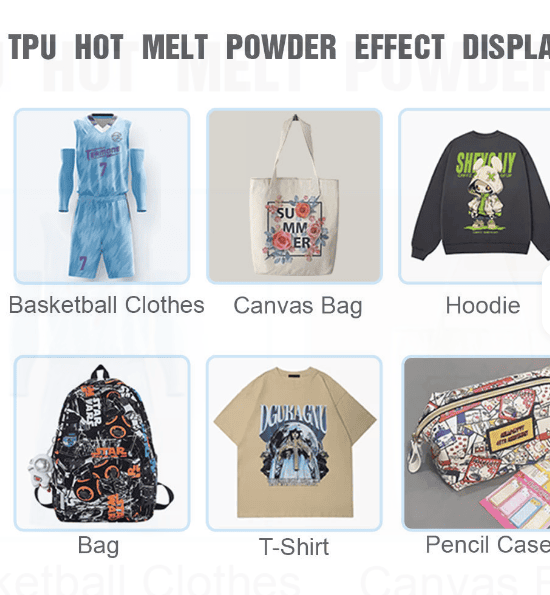
Across digital printing, garment lamination, shoe‑making, home textile bonding and many other industries, there lies an inconspicuous yet vital core material — hot‑melt adhesive powder. As a solvent‑free thermoplastic polymer bonding material, it outperforms traditional liquid glues with efficient bonding performance, eco‑friendly features and multi‑substrate compatibility, making it a preferred choice for modern manufacturing.
What Is Hot‑Melt Adhesive Powder
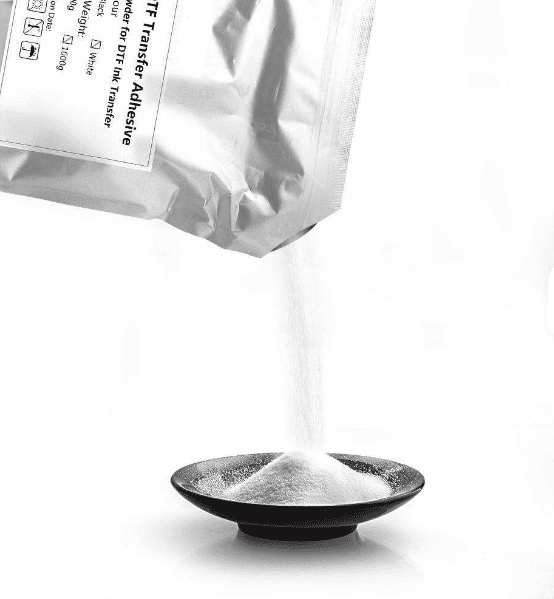
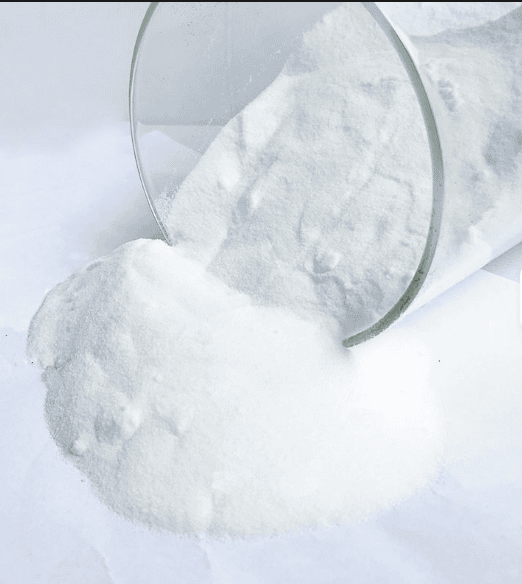
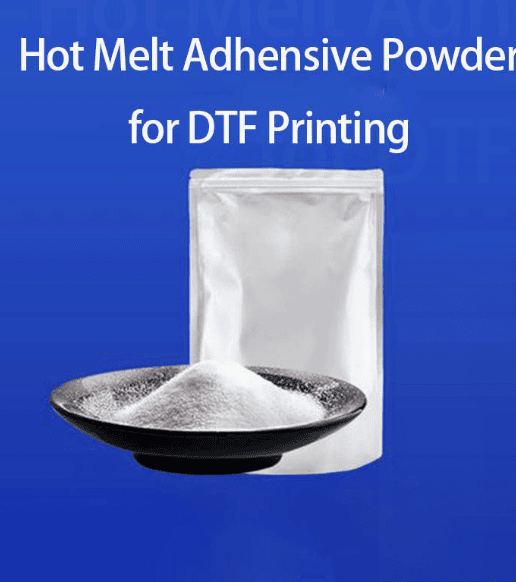
Hot‑melt adhesive powder is fine powder produced by cryogenic grinding and classified screening of polymer raw materials such as TPU, PES and EVA. It remains solid powder at room temperature with zero solvent content. When heated to its melting point, it melts rapidly to generate adhesive force and cures instantly upon cooling to complete bonding. No solvent evaporation is required during processing. It features low‑VOC safety and complies with SGS, ECO and other environmental certifications.
Different from liquid glue, it achieves physical bonding via heat pressing without drying cycles, greatly boosting production‑line efficiency while avoiding odor and contamination risks caused by solvents.
Main Materials & Core Properties
Common hot‑melt adhesive powders fall into three major systems for distinct application scenarios:
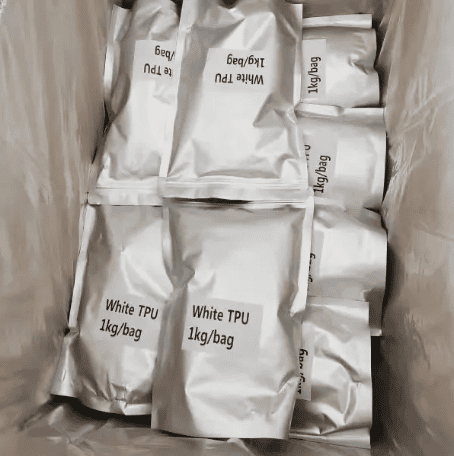
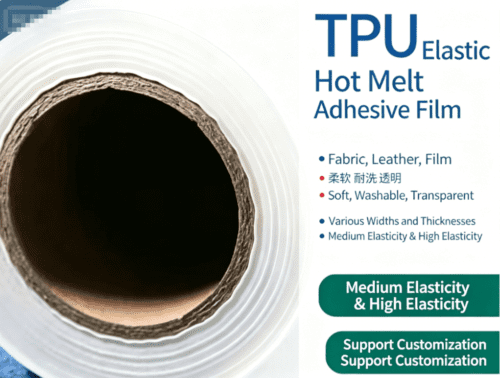
1. **TPU Hot‑Melt Adhesive Powder**: High elasticity, outstanding flexibility, resistance to repeated bending and stretching, good anti‑yellowing performance, strong adhesion and superior wash resistance. It is the top choice for DTF white ink heat transfer, seamless underwear, stretch fabrics and flexing parts of shoes. Printed patterns stay soft, crack‑proof and peel‑resistant under stretching.
2. PES Copolyester Hot‑Melt Adhesive Powder: Excellent heat resistance, high peel strength and hydrolysis resistance. Ideal for chemical fiber fabrics, home textile lamination and leather bonding, delivering stable bonding under high‑temperature washing conditions.
3. EVA Hot‑Melt Adhesive Powder: Low melting point, easy processing and cost‑effective. Widely used for general lamination, packaging and handicraft bonding.
Particle size directly influences finished quality: fine powder suits delicate patterns and small‑area heat transfer; medium‑coarse powder fits large‑area fabric lamination for even powder coating and clean powder recycling.
Wide Application Scenarios
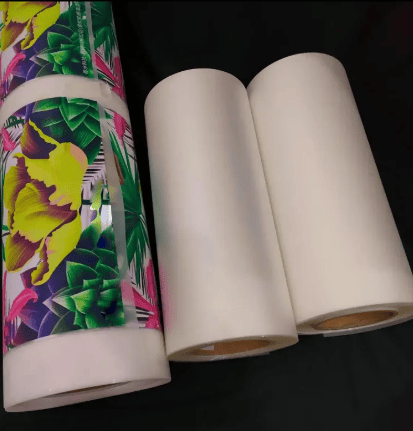
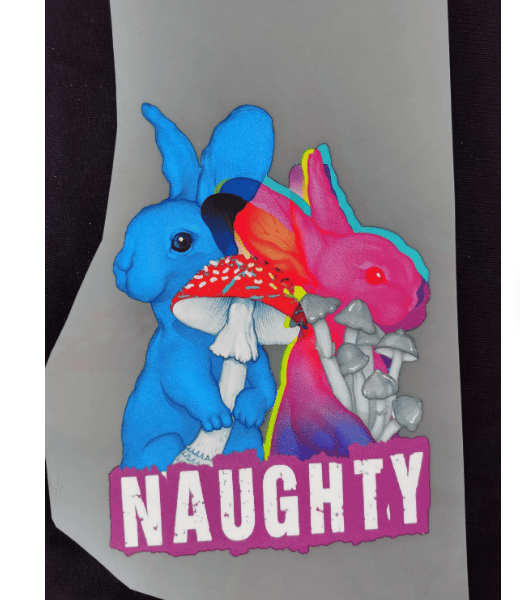
✅ DTF White‑Ink Heat Transfer**: The largest‑consuming application at present. Print on PET film, apply powder, bake for melting, then transfer patterns onto cotton, polyester and blended fabrics by heat press. Patterns withstand repeated washing, remain soft and breathable, well‑suited for small‑batch customization.
✅ Textile & Garment: Seamless underwear sealing, garment accessory lamination, care label heat transfer, down‑jacket baffle lamination. Bonded stretch fabrics keep soft hand feel.
✅ Shoes & Luggage: Shoe inner lining lamination, leather & artificial leather bonding, luggage fabric lamination. Bend‑resistant, no delamination after long‑term usage.
✅ Home Textiles & Protective Products**: Curtain composite, non‑woven fabric lamination, protective suit seam sealing. Firm bonding for mass industrial production.
✅ Other Fields: Handicrafts, automotive interior accessories and other heat‑press lamination processes.
Key Specifications for Premium Hot‑Melt Adhesive Powder
Powder shedding, delamination, stiff hand feel, yellowing and washing‑off failures in factories are mostly caused by improper powder selection. Focus on these criteria when purchasing:
1. **Uniform particle size**: Free of coarse grains and agglomerates. Even powder coating and clean powder recycling to avoid powder clogging and printing defects.
2. **Strong adhesive force**: Qualified peel strength for target substrates; no warping or peeling after heat pressing.
3. **Wash & aging resistance**: No delamination after repeated washing; low yellowing tendency during long‑term storage.
4. **Comfortable hand feel**: No stiff texture after heat transfer on fabrics; stretch fabrics stay crack‑free under tension.
5. **Environmental compliance**: SGS, ECO and other valid certificates to meet export standards.
## Tips for Material Selection
There is no one‑size‑fits‑all hot‑melt adhesive powder. Choose TPU for stretch fabrics; select PES for high‑temperature washing environments; adopt EVA for cost‑sensitive non‑elastic substrates. Optimize heat‑press temperature, pressure and duration to maximize powder performance.
As manufacturing shifts toward greener and higher‑efficiency production, hot‑melt adhesive powder keeps expanding its application scope. Proper powder selection reduces defect rates, improves finished‑product quality and strengthens your product competitiveness.