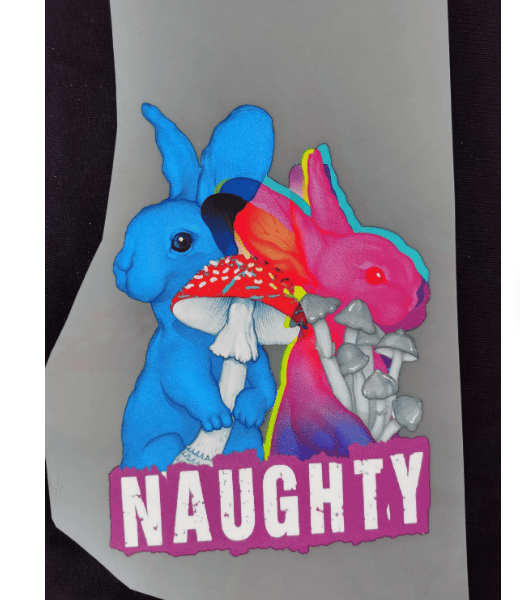
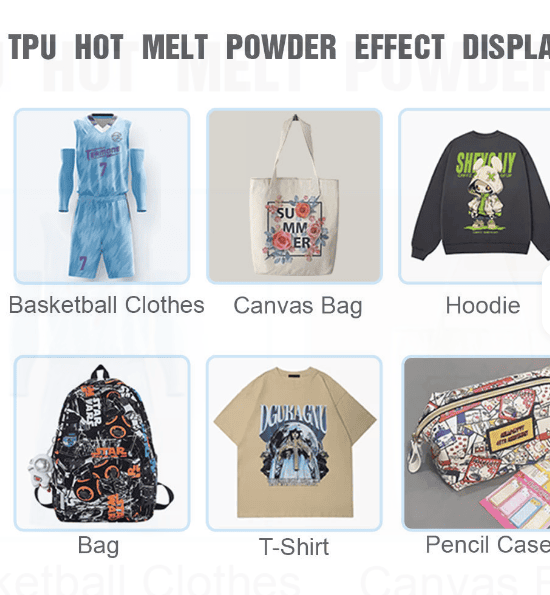
In the garment printing industry, DTF 3D puff printing has become a mainstream process to replace traditional embroidery and screen thick-plate printing. Featuring low cost, no plate fee, support for small-batch quick production and strong 3D tactile texture, it is widely applied to streetwear hoodies, T-shirts, bags, denim cultural products and more.
Many printing factories fail to produce full, uniform 3D embossed and embroidery-like effects not because of poor powder quality, but due to non-standard operating procedures, inaccurate temperature parameter control and improper details in powder scattering and curing.
This article provides a mass-production oriented DTF puff powder operation tutorial. Even beginners can steadily produce 3D textured prints with high resilience, wash resistance, no collapse and no cracking.
High-quality DTF texture puff powder inquiry: Jiangxi Juge New Materials, Ms. Li +8613126851888 (Factory direct supply, free samples for testing)
—
1. Working Principle of DTF Puff Powder
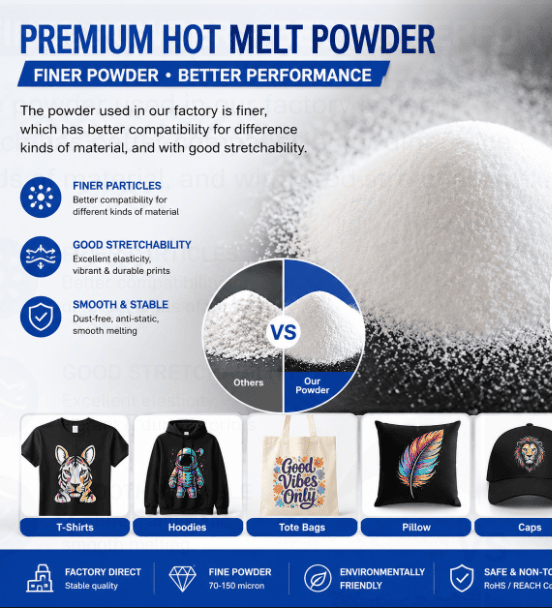
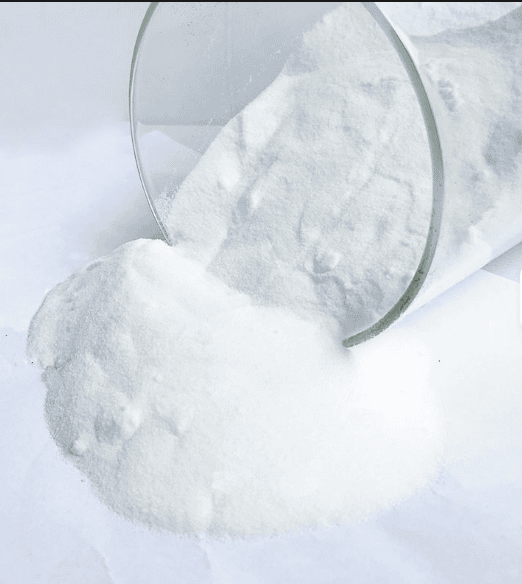
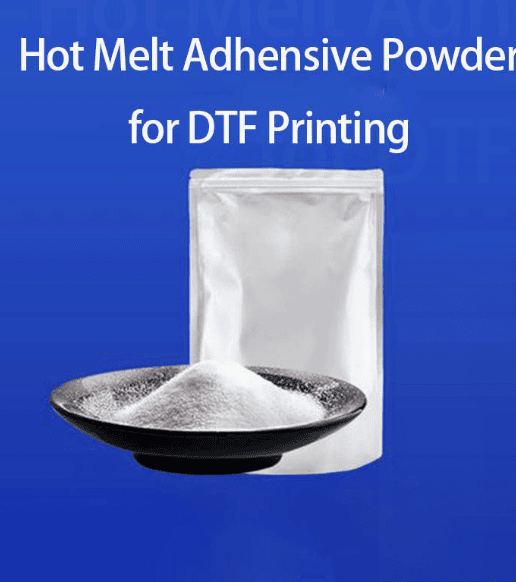
DTF puff powder (3D texture hot-melt powder / embroidery-imitation puff powder) is a thermal expansion TPU hot-melt adhesive powder.
Core principle: Wet ink powder coating → High-temperature curing & shaping → Hot press secondary foaming & embossing. It can be directly used on standard DTF white ink printing equipment without machine modification or additional equipment, perfectly replacing manual embroidery and screen thick-plate printing.
—
2. Equipment & Consumables Preparation (Compatible with All DTF Models)
2.1 Required Equipment
DTF white ink printer, automatic/manual powder shaker, constant-temperature oven/tunnel furnace, flat heat press machine
2.2 Consumable Matching
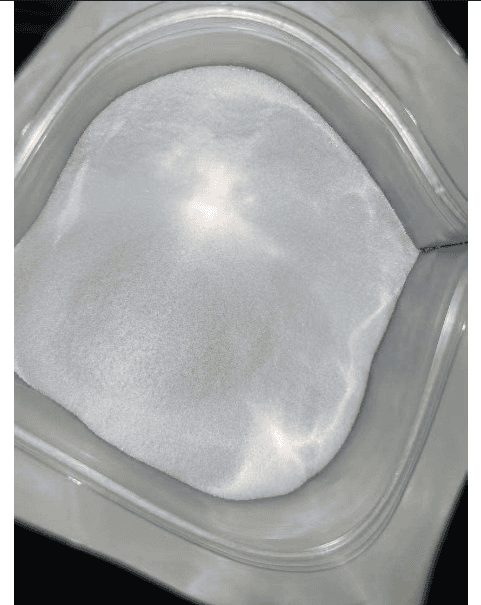
DTF transfer film, textile CMYK & white ink, special DTF 3D puff powder
2.3 Particle Size Selection Tips (Key)
– Fine particle size: Suitable for small fonts, delicate logos and minimalist textures, delivering fine foaming effect and soft hand feel
– Coarse particle size: Suitable for large-area patterns, full embroidery-style prints and heavy embossments, featuring higher foaming height and stronger three-dimensional sense
—
3. Complete Standard Operation Procedure (5-Step Mass Production Process)
Step 1: Pattern Printing (Thick White Ink as the Foundation)
Print mirror patterns normally with properly thickened white ink base layer. A full and uniform white ink layer ensures a thick, solid 3D layer without hollowing or collapse.
Key point: Scatter powder immediately after printing. Do not leave the printed film for long to avoid air drying, which will cause insufficient powder adhesion and powder falling or delamination.
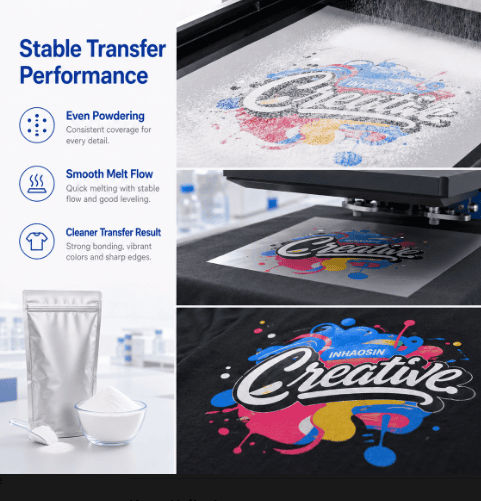
Step 2: Even Powder Scattering & Residual Powder Cleaning (Determines Finished Product Cleanliness)
Fully cover the wet ink layer with puff powder to ensure uniform powder coating on the entire pattern without ink leakage or uneven thickness.
After powder scattering, fully shake and pat the film to completely remove floating and residual powder outside the pattern. Use an air gun to clean dead corners and edges if necessary.
Pitfall reminder: Incomplete residual powder cleaning will cause spots, edge blurring and fabric sticking after heat pressing.
Step 3: Constant-Temperature Drying & Curing (Core Shaping Step)
This step only cures the powder without foaming, aiming to form a stable adhesive film with no stickiness and firm adhesion.
Standard Process Parameters: 120℃-130℃, 90-120 seconds
Curing standard: Dry and non-sticky surface, uniform film formation with smooth and delicate texture.
❌ Excessively high temperature: Advanced foaming and surface crusting, resulting in failure of secondary embossing and hard, fragile texture
❌ Excessively low temperature: Incomplete curing, causing stickiness and washing delamination after heat pressing
Step 4: Heat Press Transfer (Fabric Lamination)
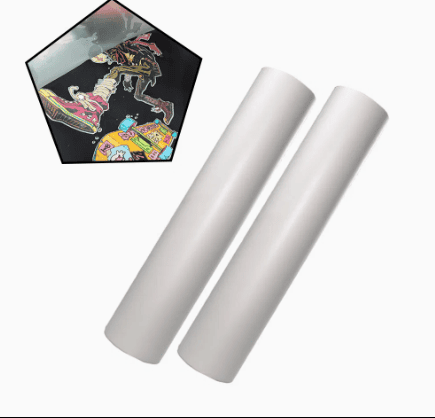
Align the cured transfer film with the fabric and place it on the heat press machine.
Standard Process Parameters: 150℃-160℃, medium pressure, 10-15 seconds
Cool completely before peeling the film! Hot peeling easily causes adhesive peeling and pattern damage.
Step 5: Secondary Heat Press (Foaming & 3D Shaping)
Perform secondary heat pressing after film peeling to fully expand the powder and form full embossed and embroidery-like concave-convex texture.
Standard Process Parameters: 160℃-170℃, 15-20 seconds, light pressure shaping
Finally, you will get full, clear, tactile 3D embroidery-effect prints.
—
4. Fabric Adaptation Guidelines
– Cotton T-shirts & Hoodies: Universal parameters, best foaming effect and ultra-strong adhesion
– Polyester & Chemical Fiber Fabrics: Reduce temperature by 5-10℃ to avoid fabric wrinkling and discoloration
– Denim & Canvas Thick Fabrics: Properly increase pressure and time for firmer foaming and better friction resistance
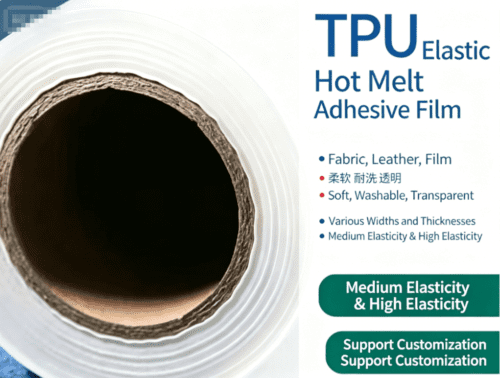
– Stretch Knitted Fabrics: Use high-elastic puff powder to ensure the print stretches with the fabric without cracking or brittling
—
5. Common Problems & Quick Solutions (Factory High-Fault Issues)
5.1 Flat print with poor 3D effect
Causes: Thin white ink layer, excessive curing temperature, insufficient temperature or time for secondary heat pressing
Solutions: Thicken the white ink layer, lower curing temperature, and optimize secondary heat pressing parameters
5.2 Uneven foaming & partial bulging
Causes: Uneven powder scattering, residual powder residue, uneven heating
Solutions: Scatter powder evenly, thoroughly clean floating powder, and ensure balanced temperature of oven and heat press
5.3 Foam collapse, peeling or cracking after washing
Causes: Incomplete curing, excessive pressing pressure, insufficient powder elasticity
Solutions: Follow standard curing parameters strictly, adjust pressure properly, and replace with high-elastic wash-resistant puff powder
5.4 Edge blurring & white spots on patterns
Cause: Residual powder on blank areas
Solution: Clean edge floating powder with an air gun after powder shaking, and complete powder cleaning before mass production
5.5 Adhesive peeling & pattern damage during film removal
Causes: Hot film peeling, incomplete curing
Solution: Peel the film slowly after full cooling, and extend curing time properly
—
6. Process Advantages
Compared with traditional embroidery and screen thick-plate printing, DTF puff powder process has obvious advantages:
– No plate making required, suitable for both small-batch and large-batch orders
– Realistic 3D embroidery texture, lightweight and comfortable to wear without hard feeling
– High elasticity and wash resistance, no collapse, cracking or falling off after repeated washing
– High production efficiency, lower mass production cost and higher profit margin
—
Cooperation Information
High-quality puff powder is the key to stable mass production of 3D texture, embroidery-imitation and embossed prints!
Jiangxi Juge DTF texture puff powder features uniform foaming, high elasticity, excellent wash resistance, environmental compliance, no screen clogging and no caking, compatible with most fabrics and stable for large-scale production.