In an era where technology shrinks relentlessly—from implantable medical devices to folding smartphones—the demand for miniature components with tolerances tighter than a human hair has never been greater. At the heart of this miniaturization revolution lies CNC micro-turning parts manufacturing, a specialized subtractive process that produces cylindrical components measured in fractions of a millimeter. This article explores what CNC micro-turning entails, its capabilities, materials, applications, and the challenges that make it both an art and a science.
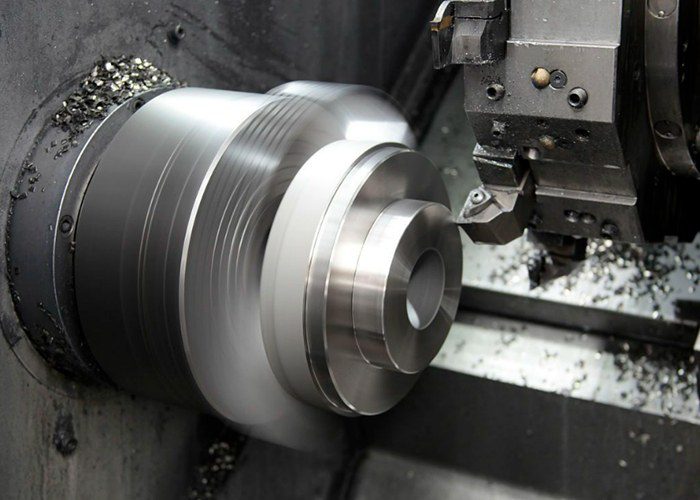
CNC micro-turning is a precision machining process that uses computer numerical control (CNC) lathes—often Swiss-type turning centers—to create small, complex parts from bar stock. Unlike conventional turning, where the workpiece rotates against a single-point cutting tool, micro-turning operates at the microscale. Parts typically feature diameters below 3 mm, and many are smaller than 1 mm. Tolerances can reach ±0.001 mm or even tighter, with surface finishes measured in mirror-like Ra values. The process is subtractive: material is removed to achieve the desired geometry, but the precision required is extraordinary.
The equipment itself is highly specialized. Swiss-type lathes are the workhorse of micro-turning because their sliding headstock design supports the workpiece close to the cutting tool, minimizing deflection. Live tooling allows milling, drilling, and cross-drilling in the same setup, enabling complex features like flats, slots, threads, and eccentric geometries. Multi-axis configurations—often with seven or more axes—permit simultaneous machining, reducing cycle times and eliminating secondary operations. For even finer work, micro-turning centers may incorporate air-bearing spindles that rotate at tens of thousands of RPM, ensuring smooth cuts and minimal vibration.
Materials used in CNC micro-turning span a wide spectrum. Metals include stainless steel (especially biocompatible grades like 316L), titanium, brass, aluminum, copper, and exotic alloys such as Inconel and Nitinol. Plastics are equally important: PEEK, PTFE, acetal, and polycarbonate are common for insulators, seals, and lightweight components. The choice of material depends on the application—medical implants demand corrosion resistance and biocompatibility; aerospace sensors require high strength-to-weight ratios; electronics need excellent conductivity. Each material presents unique machining challenges, from work hardening in stainless steel to thermal expansion in plastics.
The applications of CNC micro-turning are as diverse as they are critical. In the medical field, micro-turned parts include catheter tips, biopsy needles, surgical stapler components, bone screws, and dental implants. These parts must be flawless; a burr or dimensional error can mean the difference between a successful procedure and a patient complication. In aerospace, micro-turning produces fuel injector nozzles, pressure sensors, and guidance system components that operate under extreme temperatures and vibrations. Electronics rely on micro-turned pins, connectors, and RF contacts for smartphones, wearables, and satellites. Automotive uses include fuel injector parts, oxygen sensors, and miniature actuators for advanced driver-assistance systems. Even optics benefit—micro-turned ferrules and lens mounts ensure precise alignment in fiber optic networks.
The advantages of CNC micro-turning are compelling. First, it offers unmatched repeatability. Once a program is validated, thousands of identical parts can be produced with negligible variation. Second, it minimizes material waste; near-net-shape bar stock is machined to final form, and scrap is recyclable. Third, it handles hard materials that other processes cannot, such as heat-treated titanium or carbide. Fourth, automation enables lights-out manufacturing, where machines run unattended overnight, reducing labor costs. Finally, the process integrates easily with secondary operations like deburring, cleaning, and inspection, streamlining production.
Yet micro-turning is not without challenges. Tool deflection is a constant enemy; even a tiny force can bend a 0.5 mm diameter tool, causing taper or chatter. Thermal expansion—from both the machine and the workpiece—can shift dimensions by microns, requiring temperature-controlled environments. Chip control is difficult because small chips can wrap around tools or clog coolant passages. Handling finished parts is another hurdle; tweezers and vacuum systems are often needed to avoid damage. Metrology is equally demanding: measuring a 0.2 mm feature requires vision systems, laser micrometers, or coordinate measuring machines (CMMs) with micro-probes. Finally, skilled operators are scarce; programming and setting up micro-turning centers requires years of experience.
Quality control in CNC micro-turning is rigorous. In-process monitoring uses force sensors and acoustic emission to detect tool wear or breakage. Vision systems inspect parts at high magnification, while optical comparators verify profiles. For medical and aerospace parts, cleanroom environments and full traceability are mandatory. Statistical process control (SPC) tracks dimensions over time, and first-article inspection validates every new setup. The goal is zero defects—because at this scale, a single out-of-tolerance part can cause a system failure.
Looking ahead, CNC micro-turning is evolving. Hybrid machines that combine turning with additive manufacturing allow repairs and custom features. Robotics and automated pallet systems enable unattended production. IoT sensors predict maintenance needs and optimize cutting parameters in real time. New tool materials, such as diamond-coated carbide and cubic boron nitride, extend tool life. And as demand grows for microfluidic devices, implantable sensors, and tiny drones, the boundaries of what can be turned will continue to expand.
In conclusion, CNC micro-turning parts manufacturing is a cornerstone of modern precision engineering. It transforms raw bars into critical components that power medical breakthroughs, aerospace innovation, and consumer electronics. While the challenges are significant—deflection, thermal control, metrology, and skilled labor—the rewards are immense. As technology shrinks further, the ability to turn ever-smaller parts with ever-tighter tolerances will remain a vital competitive advantage. For engineers and manufacturers, mastering micro-turning is not just about making small parts; it is about enabling the big ideas of tomorrow.