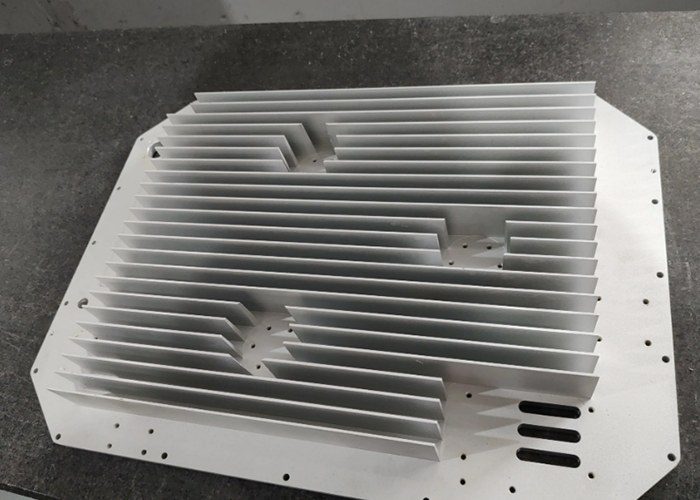
In the realm of precision manufacturing, few capabilities signal technological sophistication and boundless potential like 5-axis CNC machining. It is not merely an incremental improvement over its 3-axis predecessor; it is a paradigm shift, transforming digital designs into physical realities with a freedom and fidelity once deemed unattainable. A true 5-axis machining service is not just a vendor; it is a partner in innovation, unlocking geometries, efficiencies, and quality levels that redefine what can be built.
At its core, 5-axis CNC machining refers to the synchronized movement of a cutting tool across five different axes simultaneously. While traditional 3-axis machines move linearly along the X, Y, and Z planes, 5-axis machines add two rotational axes (typically A and B, or B and C). This allows the cutting tool to approach the workpiece from virtually any direction in a single, fluid setup. This fundamental difference is the source of its revolutionary power, manifesting in three critical advantages: unparalleled precision, mastery over complex geometry, and dramatic gains in efficiency.
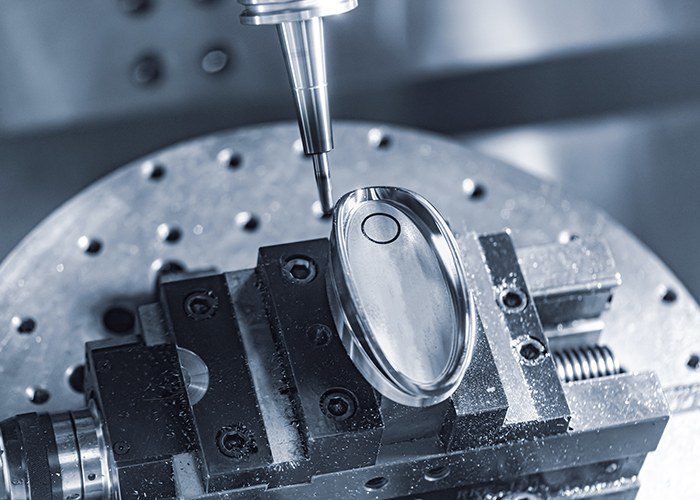
Precision in machining is often a battle against rigidity and set-up error. In 3-axis machining, a complex part may require multiple re-fixturings—each manual repositioning introduces a tiny but cumulative margin for error. 5-axis machining conquers this by allowing the complete machining of most, if not all, features in one clamping. The part remains securely fixed while the spindle and tool rotate around it. This “single setup” methodology ensures exceptional positional accuracy and superior surface finishes, as the optimal cutting orientation can be maintained across contoured surfaces, eliminating the stair-stepping effect common in 3-axis milling of curves.
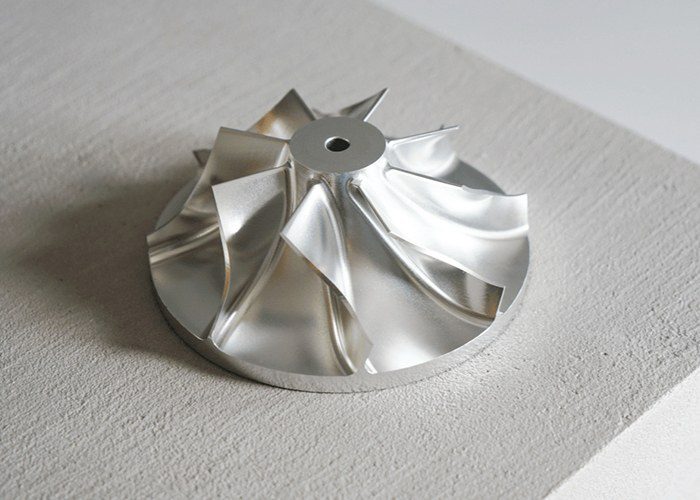
The ability to tackle supremely complex geometry is where 5-axis machining truly becomes an art form. It is the definitive solution for parts that are organic, aerodynamic, or sculptural—shapes that simply cannot be manufactured in a single setup otherwise. Think of a monolithic aerospace impeller with shrouded, twisted blades, a medical implant that must mimic the exact curvature of human bone, or a fluid dynamics component with internal channels that follow an optimized sinuous path. These are not just parts; they are functional sculptures that demand the tool access and uninterrupted toolpaths only 5-axis motion can provide. It enables the creation of lighter, stronger, and more efficient designs by consolidating assemblies into single, high-integrity components.
Furthermore, the efficiency gains are substantial. While the programming is more complex, the payoff is a significantly reduced production timeline. Eliminating multiple setups slashes non-cutting time, reduces fixture costs, and accelerates time-to-market. Additionally, the ability to use shorter cutting tools at optimal angles allows for higher feed rates and deeper cuts without sacrificing tool rigidity or inducing vibration. This not only speeds up machining but also extends tool life, improving overall process economics. Moreover, advanced 5-axis machines often incorporate automated probing and tool-setting, pushing towards “lights-out” manufacturing where uninterrupted production runs become a reality.
Distinguishing between continuous 5-axis machining and 3+2 axis machining is crucial. A premier service offers both. In 3+2 or positional 5-axis machining, the rotary axes position the workpiece at a fixed angle, and then 3-axis milling occurs. This is excellent for accessing difficult angles and is simpler to program. Continuous 5-axis, however, involves all five axes moving in coordinated motion during the cut—this is essential for machining complex, doubly-curved surfaces like those found in turbomachinery or high-end molds. The choice depends on the part, and a knowledgeable service provider will recommend the most effective and economical strategy.
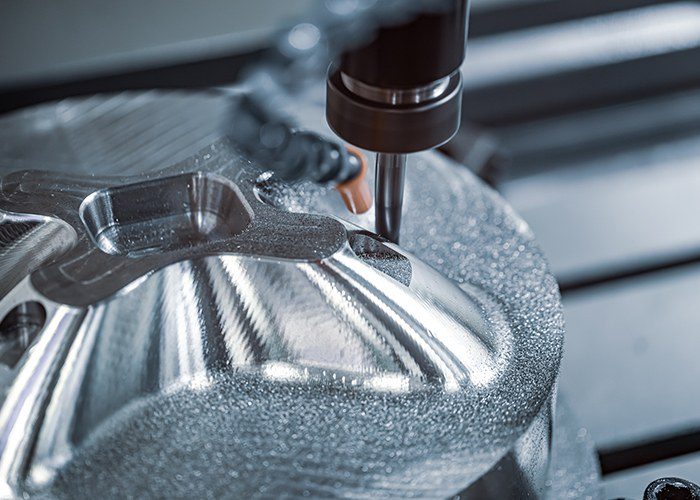
Choosing the right 5-axis CNC machining service, therefore, is a strategic decision. Look beyond the machine’s brand. Evaluate the engineering expertise behind the programming, the mastery of CAM software capable of generating efficient, collision-free toolpaths, and the metrology equipment to verify the intricate parts produced. The ideal partner possesses not just advanced hardware, but deep process knowledge, material science understanding, and a collaborative mindset.
In conclusion, 5-axis CNC machining service is the gateway to next-generation manufacturing. It transcends the limitations of conventional machining, empowering designers and engineers to innovate without constraints. It turns the impossible into the achievable, the complex into the routine, and the prototype into a high-performance production reality. In a world demanding smarter, more integrated, and more sophisticated components, partnering with a proficient 5-axis machining service isn’t just an option—it’s an imperative for those aiming to lead.