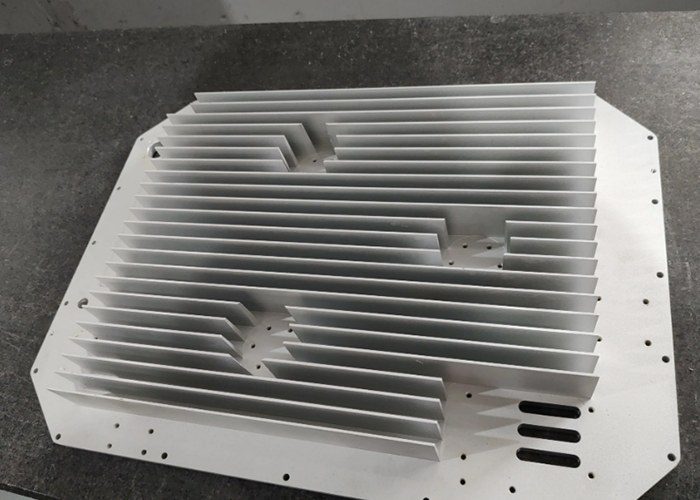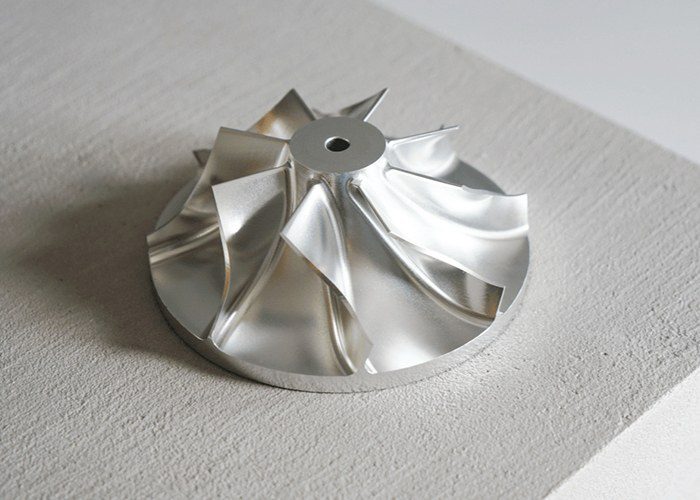
In the ever-evolving landscape of precision manufacturing, 4-axis CNC milling has emerged as a transformative technology that bridges the gap between basic 3-axis machining and the complexity of 5-axis systems. By introducing a rotational axis to the traditional three linear movements, 4-axis CNC milling of metal parts offers manufacturers enhanced capabilities, improved efficiency, and superior quality across a wide range of industries. This article explores the technology, advantages, and applications of 4-axis CNC milling for metal components.

Understanding 4-Axis CNC Milling Technology
A 4-axis CNC milling machine operates along four axes of motion: the three linear axes—X (left-right), Y (front-back), and Z (up-down)—plus one rotary axis. This fourth axis is typically implemented through a rotary table integrated into the machine bed, which rotates the workpiece around the X-axis (commonly designated as the A-axis). The rotary table can either index the workpiece to precise angular positions or rotate it continuously during cutting operations.
The configuration of 4-axis machines varies depending on the specific application and machine design. In many vertical machining centers, the rotation occurs around the X-axis, while other configurations may use a B-axis (rotation around Y) or C-axis (rotation around Z). Regardless of the specific arrangement, the fundamental principle remains the same: the workpiece rotates while the cutting tool moves along the three linear axes, enabling access to multiple faces of the part in a single setup.
Two Operating Modes: Indexed and Continuous
4-axis CNC milling offers two primary operating modes, each suited to different part geometries and requirements. Indexed machining—also known as 3+1 machining—involves rotating the workpiece to a set angle, locking the rotary axis in place, and then performing standard milling operations. The part then rotates to the next angle, locks again, and the process repeats. This method is ideal for drilling radial holes, cutting keyways, and machining flat faces at various angles.
Continuous or simultaneous machining, on the other hand, involves the rotary axis moving while the cutting tool is actively machining. All axes interpolate in real time, allowing the tool to follow complex three-dimensional surfaces. This mode produces smoother surface finishes and shorter cycle times, making it particularly suitable for helical grooves, spiral contours, cam profiles, and curved surfaces.
Key Advantages Over 3-Axis Machining
The transition from 3-axis to 4-axis CNC milling brings substantial improvements across multiple dimensions. It excels at manufacturing complex parts with superior accuracy and minimal setups. While a 3-axis machine requires manual re-fixturing and repositioning to machine different faces of a part—often requiring five to six setups for complex components—a 4-axis machine can accomplish the same work in just one or two setups.
This reduction in setups delivers several compounding benefits. First, it eliminates the cumulative positioning errors that arise from repeated clamping and unclamping operations. Second, it significantly reduces auxiliary time and labor costs. Third, it enables superior accuracy and consistency across all machined features. Research indicates that 4-axis machining can improve processing efficiency by up to 30% compared to three-axis machines.
Surface finish quality also sees marked improvement with 4-axis machining. The ability to rotate the workpiece during cutting allows for consistent spindle speed and feed rate adjustments, resulting in superior surface finishes that are particularly advantageous in industries where surface integrity is paramount. Furthermore, 4-axis machines can achieve tighter tolerances—typically within ±0.001 inch for positional accuracy—making them suitable for demanding applications.
Material Versatility
Four-axis CNC milling machines demonstrate remarkable versatility in the range of materials they can process. Common metals include aluminum, which is widely used in aerospace and automotive applications due to its high strength-to-weight ratio and corrosion resistance. Stainless steel, titanium, and various superalloys such as Inconel and Hastelloy are also routinely machined. The process accommodates everything from softer materials to extremely hard alloys, with optimized cutting parameters made possible by the additional rotational axis.
Key Application Industries
The capabilities of 4-axis CNC milling make it indispensable across numerous industries. In the aerospace sector, it is essential for producing complex components such as turbine blades, aircraft structural parts, and engine housings. The high precision and intricate geometries required in these parts are achievable precisely because of the additional rotational axis.
The automotive industry similarly benefits from 4-axis machining for engine components and other complex parts. The medical device sector relies on this technology for surgical instruments and implants that demand micron-level accuracy and superior surface finishes. Additional applications span defense, electronics, marine, and food processing industries.
Programming and Implementation
The workflow for 4-axis CNC milling begins with creating a 3D model in CAD software, followed by generating toolpaths in CAM programs such as Mastercam, Fusion 360, or NX. The CAM software outputs G-code—the machine’s instruction set for axis movements, spindle speeds, feed rates, and coolant application. Proper workholding is critical, with the workpiece clamped onto the rotary table using chucks, tombstones, or custom fixtures that must resist rotational forces while maintaining clear tool access.
Conclusion
4-axis CNC milling of metal parts represents a significant advancement in manufacturing technology. By combining the three linear axes with a rotational axis, this process delivers enhanced flexibility, superior precision, improved efficiency, and better surface finish quality compared to traditional 3-axis machining. While not as complex as 5-axis systems, 4-axis machining offers a cost-effective solution for producing intricate metal components across aerospace, automotive, medical, and countless other industries. As manufacturing demands continue to evolve toward greater complexity and tighter tolerances, 4-axis CNC milling will remain an essential tool in the modern machine shop, enabling the production of high-quality metal parts with efficiency and precision.