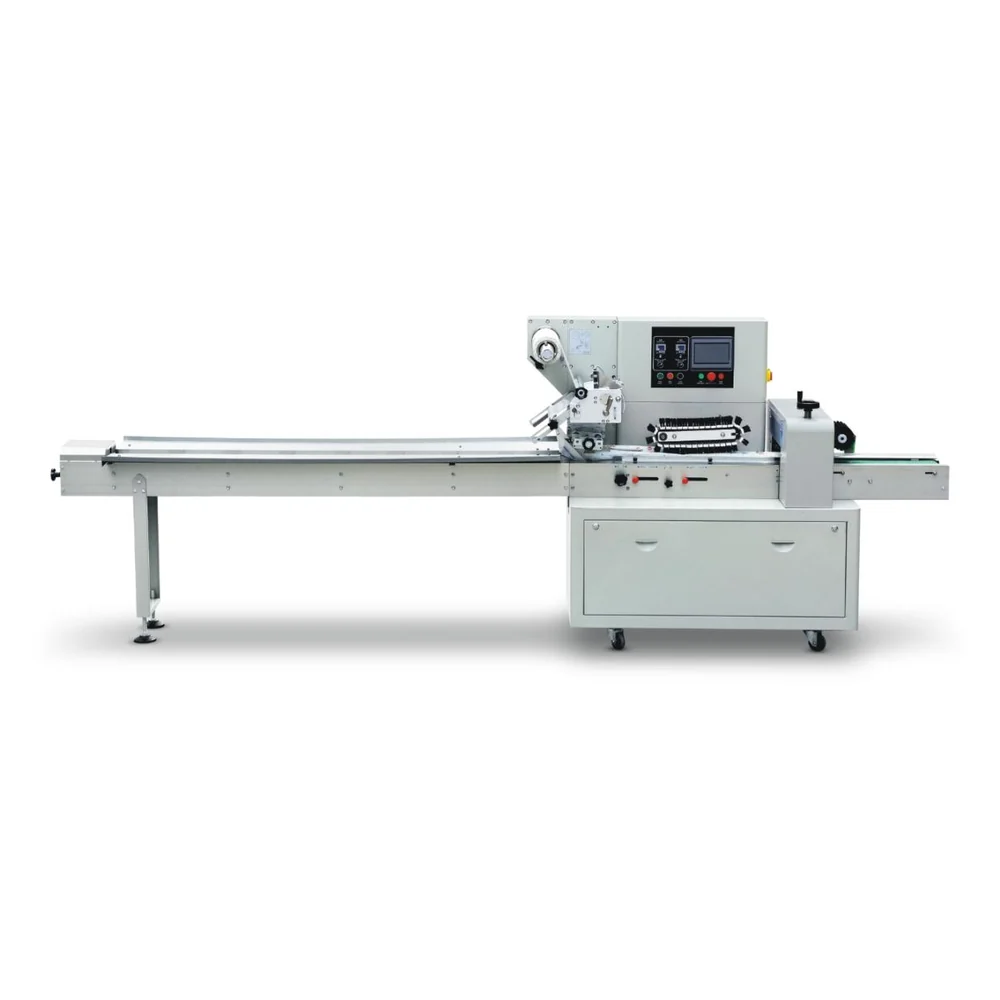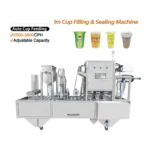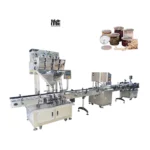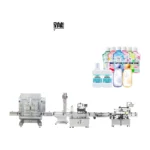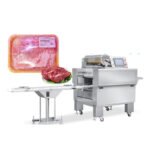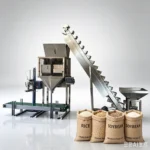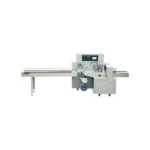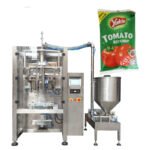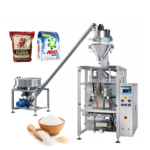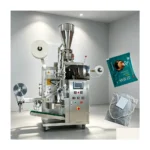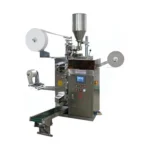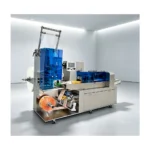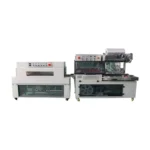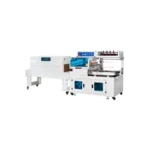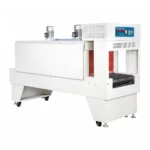
A horizontal flow wrapper should be selected around the product dimensions, feeding method, film, sealing requirements and target speed. Bread and bakery products often need gentle handling; vegetables may require breathable film or product-specific sealing; hardware needs stable feeding and puncture-resistant packaging. The correct machine is the one that produces a reliable seal with your real product and film.
This buying guide covers the most important decisions before purchasing a horizontal flow wrapping machine. You can also compare machines in our horizontal flow wrapper category.
What a Horizontal Flow Wrapper Does
A flow wrapper feeds products horizontally into a continuous film tube, creates a longitudinal seal and makes end seals around each pack. It is commonly used for products that can be placed individually or in groups on an infeed conveyor. The machine is also called a pillow packing machine or horizontal form-fill-seal machine.
Match the Machine to the Application
| Заявка | Feeding concern | Film or seal concern | Useful options |
|---|---|---|---|
| Bread and bakery | Avoid crushing and product gaps | Attractive seals and suitable freshness barrier | Automatic feeding, date coder, gas flushing where required |
| Vegetables and fresh produce | Irregular size and moisture | Ventilation and film suitability | Adjustable bag length, perforation or application-specific film |
| Snacks and confectionery | Consistent spacing | Clean end seals | Photo-eye registration and easy recipe change |
| Hardware and components | Stable orientation and counting | Puncture resistance | Automatic counter, metal detector or reject system |
| Trays and grouped products | Tray stability | Film width and pack height | Guides, extended infeed and product sensors |
Eight Questions to Answer Before Buying
1. What are the exact product dimensions?
Provide minimum and maximum length, width and height. Include the product in its final condition; soft bread, vegetables and grouped hardware can change shape during feeding. The film former, sealing jaw and conveyor spacing depend on these dimensions.
2. How will the product enter the machine?
Manual feeding is flexible for lower output and mixed products. Automatic feeding is better for a stable upstream process but requires product spacing and synchronization. The infeed design is often as important as the wrapping machine itself.
3. What output is actually required?
Define normal and peak packs per minute. Product length, feeding consistency and film characteristics influence achievable speed. Ask the supplier to test with representative products rather than quoting only the maximum empty-machine speed.
4. Which film will be used?
Film material, thickness, width, sealing layer and print registration affect sealing temperature and appearance. Printed film requires a photo-eye and correct mark spacing. For sharp hardware, confirm puncture resistance and edge protection.
5. Does the product need a top, bottom or side seal?
Seal position affects appearance and product contact with the sealing area. Products with crumbs, moisture or irregular surfaces need sufficient clearance so contamination does not enter the seal.
6. Is modified atmosphere or date coding required?
Some food applications may use gas flushing, while many products require production dates, batch codes or expiry dates. Confirm coder type and mounting position early because it affects film routing and control integration.
7. How often will sizes change?
Frequent changeovers favor accessible controls, stored recipes, clear scales and easy former replacement. Ask the supplier to demonstrate a complete changeover instead of only showing normal running.
8. What downstream equipment is needed?
A flow wrapper can connect with checkweighers, metal detectors, cartoners or collecting conveyors. The full line should prevent accumulation and protect finished packs from damage.
Manual Feeding vs Automatic Feeding
Manual feeding is suitable when products vary, operators need to inspect orientation, or the current output is moderate. It reduces upstream complexity but depends on labor consistency.
Automatic feeding can improve continuity when products arrive from a stable production line. It may use belts, pushers, chain lugs or customized devices. The correct method depends on whether the product is soft, sticky, irregular, fragile or counted.
How to Evaluate a Machine Trial
- Run the smallest and largest product formats.
- Use the intended production film, including printed film if applicable.
- Check longitudinal and end-seal strength after cooling.
- Inspect product position, film tension and package appearance.
- Measure stable output over a meaningful run, not only a short demonstration.
- Perform a changeover and confirm cleaning access.
Frequently Asked Questions
Can one flow wrapper pack bread and hardware?
The same basic machine principle can package both, but feeding, film, sealing jaws and hygiene requirements differ. A machine should be configured for the actual product family.
Can a flow wrapper use printed film?
Yes, when equipped with a registration sensor and the printed film marks are compatible with the control system.
What samples should I send?
Send representative products, packaging film, dimensions, photos and a video of the upstream process. Include every important size, not only the easiest one.
Request a Flow Wrapping Solution
Longteng can recommend a horizontal flow wrapper for bread, bakery, vegetables, hardware and other products after reviewing your samples, film and target output. Send your packaging requirements by WhatsApp.